
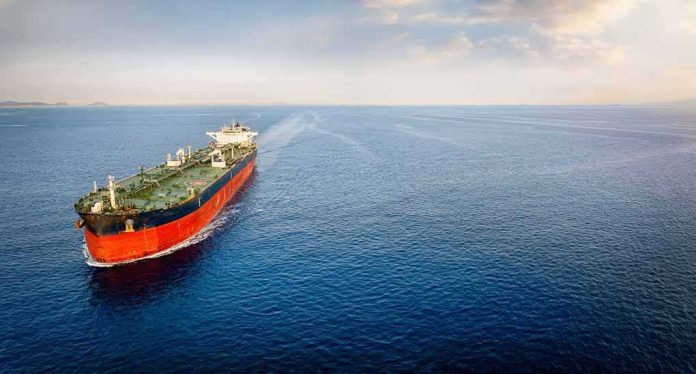
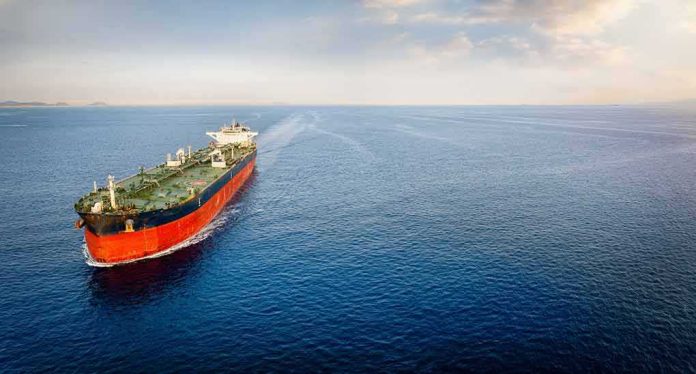
Two Saudi oil tankers have just turned around in the Red Sea after an email threat from rebels – without a single shot being fired – demonstrating the power a small group now holds over a key artery of the global economy.
Story Overview
- Houthi rebels in Yemen declared a naval blockade against Saudi Arabia, then warned shippers by email not to use Saudi ports.
- At least two tankers carrying Saudi oil to China and India turned around in the Red Sea and returned to the Suez Canal after the warning.
- Shipping data companies say several oil tankers linked to Saudi Arabia have reversed course, marking the first evident disruption to Saudi oil exports from the Red Sea.
- This confrontation at the Bab el-Mandeb chokepoint increases risks to global energy prices and reveals how fragile major trade routes have become.
What exactly happened to the Saudi oil tankers?
On Tuesday, two large tankers loaded with Saudi crude oil in the Red Sea suddenly reversed course instead of sailing south toward the Bab el-Mandeb Strait near Yemen. Shipping data shows that the Xin Long Yang and Rodos, carrying about 2.7 million barrels bound for China and India, turned north toward the Suez Canal to avoid waters where the Houthis operate. It wasn’t a random move. The turnaround came a day after Yemen’s Houthi movement announced a naval blockade against Saudi Arabia and warned ships not to use Saudi ports.
Journalists and maritime analysts say the tankers changed course “following a warning” from the Houthis, who sent an email informing shipping companies that ships loading or unloading at Saudi ports could be attacked “anywhere” within their range. A maritime intelligence firm, Windward, later said a total of five oil tankers linked to Saudi Arabia had reversed course in the Red Sea after the threat. This makes this event the first clearly documented disruption of Saudi oil flows directly linked to the new blockade.
How the Houthi blockade works without firing shots
On July 20, the Iranian-backed Houthi movement in Yemen declared a “maritime blockade” against Saudi Arabia, claiming it was punishment for a long-term Saudi-led siege and strikes against Yemeni ports and airports. Their fighters control territory along the Bab el-Mandeb Strait at the southern end of the Red Sea, a critical chokepoint for oil flowing between the Middle East, Europe and Asia. The group sent an email to shipping companies telling them that ships should not load or unload goods at Saudi ports and warned that violators could be targeted anywhere the Houthis can reach.
This threat adds to a long history of Houthi attacks on ships, including missile and drone strikes and explosive speedboat assaults, so companies know the rebels are willing and able to strike oil tankers. The U.S. Maritime Administration has warned U.S.-flagged ships that they face increased risks in the Red Sea and Bab el-Mandeb region from hostile actors, and even advised disabling tracking signals in some cases. All this creates a climate of fear where a simple email warning is enough to make captains and owners think twice before passing through Yemen.
Saudi resilience in the face of new vulnerabilities
Saudi Arabia is not powerless in the face of this situation. In recent months, the state oil company has used its Red Sea port of Yanbu, spare production capacity and overseas storage to keep exports flowing as other routes have come under pressure. Reuters reported that crude loadings at Yanbu continued even after an earlier attack on the kingdom’s East-West pipeline, demonstrating that the port can operate under threat. Yanbu even briefly loaded around 4.7 million barrels per day, above its usual sustainable cap, proving it can handle surges when needed.
But this new blockade affects the Red Sea route itself. Analysts note that much of Saudi crude exports pass through this corridor, and the Houthis are trying to scare not only Saudi-flagged ships, but also any ship that touches Saudi ports. Some Asian buyers continue to send tankers to the area, but the fact that several ships have turned around shows real hesitation. At this point, there is no public forensic data from the ship captains proving that the Houthis were the sole reason for each course change, but the timing and the rebels’ own claims strongly link the reversals to the threat of blockade.
Why it matters to everyday Americans and global stability
The Bab el-Mandeb Strait is one of the world’s pressure points. A small number of armed fighters on land can force giant corporations to reroute their ships and increase the days and costs of each barrel of oil. Since late 2023, the Houthis’ campaign in the Red Sea has already pushed many major shipping companies to send their ships around Africa rather than through the Suez Canal and the Red Sea, thereby increasing the prices of goods and fuel around the world. Today, with the direct threat of a blockade against Saudi Arabia, millions of additional barrels of crude oil are at risk.
At least one of the tankers that turned around yesterday in the Red Sea made a second U-turn, heading again towards Houthi-controlled Bab el-Mandeb.
The ship, carrying Saudi oil, signals “CHINA CREW & OWNER”. At current speed, she will cross the strait in…
–Javier Blas (@JavierBlas) July 22, 2026
For Americans, it matters even if no one here sees the tankers. Higher risk on major shipping lanes often translates into higher oil prices, which translates into higher prices for gas, heating and food transportation. Many on the left and right already feel that global conflicts, elite decisions, and opaque trade routes continue to drive up costs while Washington talks more than it does. This episode reinforces that worry: A rebel email in Yemen may change the direction of Saudi oil, but the federal government is still struggling to protect basic economic stability.
Sources:
19fortyfive.com, straitstimes.com, youtube.com, nytimes.com, abcnews.com, fr.wikipedia.org, maritime.dot.gov, bloomberg.com, discoveryalert.com.au, Reuters.com, instagram.com, itf-oecd.org, nllp.jallc.nato.int
Source link