

A new startup is taking a different approach to helping people manage screen time. Instead of blocking apps or restricting phone usage after a specific period, an app is called for island Encourages you to achieve your screen time goals with this farming simulation game. Yes game! Island works by rewarding you when you’re disciplined enough to achieve your goals with a “credit score” that increases your farm’s production, and unlocks new crops, animals, and other content.
The carrot rather than the stick approach was dreamed up by entrepreneurs Ashish Selvaraj (CEO) and Ethan Bronev (CTO), who met while studying at the University of Waterloo and then went on to work at companies including Jane Street, Citadel, Databrix and Microsoft.
Later, they left their jobs to join startup accelerator Y Combinator, where they first tried other ideas in areas like B2B and SaaS, but didn’t find a fit.
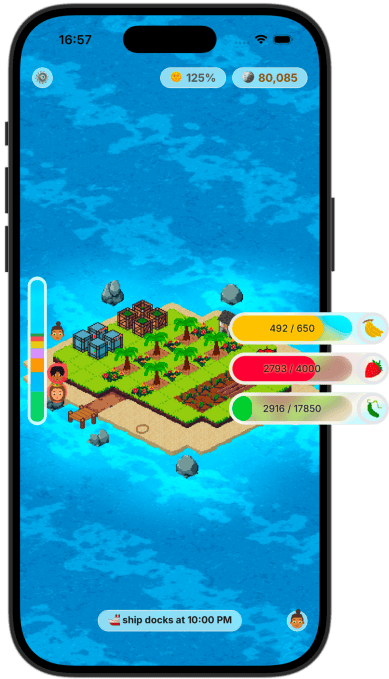
The island ended up being their fifth hub, and the first that the founders found themselves really enjoying.
“Once we were at YC, I think there was a big mentality – I think so [San Francisco]In general – from “selling shovels”. “Everyone wants to ‘sell shovels’ to other companies, and that’s what’s been happening around us,” explains Selvaraj, talking about the concept that many successful startups sell tools, infrastructure or services to others in the wake of a current market boom or trend it may be.
“So, all the ideas we had — we tried these things — but we found that we weren’t passionate about them. Like idea after idea, it seemed like the product ultimately was just a control panel with a different backend of some sort,” he added. “We felt like we were quitting our jobs…just to do something that was different.”
With Island, the team is able to tap into their creativity, having drawn the pixel art themselves.
“A lot of people are using [AI] “Models to generate art, but we felt like it had a certain feel to it when we drew it ourselves,” he told TechCrunch. “I feel like Claude has become so good, I feel like there’s a tendency to hand over every task to Claude. But in the end it’s like there’s something else that comes out when you do it yourself, especially in something like art,” Selvaraj said.
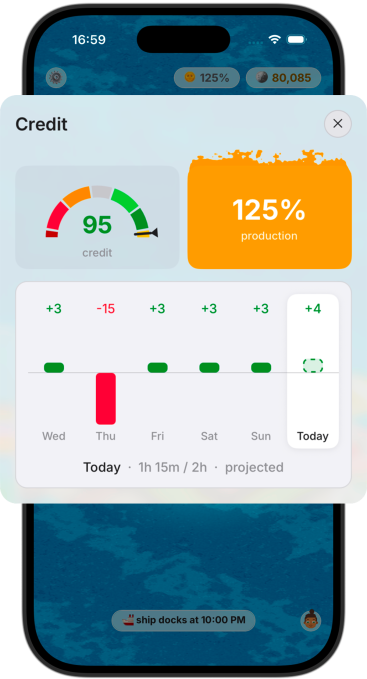
Moreover, the app appears to be successful in helping users achieve their goals, the startup’s early data shows. After early testing and launch in October, the team says the majority of its users (82%) will end their screen time at their set limit. Many people end their screen time when they get a “15 minutes remaining” warning.
Island can appeal to those who have given up on other screen time apps out of frustration because the app doesn’t actually block you from accessing the apps or your phone. This is something that can end up being more annoying, especially when you are in the middle of doing something, like posting, sharing, commenting, or chatting, among other things. Instead, Island taps into users’ self-discipline and desire to see their island thrive to encourage screen breaks.
The idea of encouraging users to maintain their goals by offering another type of in-app reward system isn’t exactly new. Last year, Hank Green’s Focus Friend app went viral for his experiment, which featured a little friend who could just link items which, in turn, allowed you to get points used to decorate your room when you were focusing on your non-distracting apps.
Similar ideas have been used in self-care apps and habit tracking apps such as Finch, Amaro, Belly, Flora, Orso, And others. But Island expands this concept from a focus on helping a virtual friend or virtual pet to a concept more akin to a game — one in which you can experience the consequences without “having to torture your pet,” Selvaraj points out.
Island also allows users to add friends, visit each other’s islands, compete in group challenges, and hold each other accountable by linking your island with one friend of your choice. In the latter scenario, if either friend exceeds the limit, both islands will suffer.
The startup says Island has proven to be fairly “stable”, with a ratio of daily active users to monthly active users of 51%, and a 30-day retention rate of 49%, meaning 49% of users are still active on the app on the 30th day since installing the app.
The app is currently free to use, with a $39.99 per year subscription that allows you to set individual limits for different apps, rather than just an overall daily screen time limit. The company has not raised additional seed funding outside of YC, but plans to begin marketing the app on social media for the rest of the year.
When you buy through links in our articles, we may earn a small commission. This does not affect our editorial independence.
