
This story appeared in Today, Explained, a daily newsletter that helps you understand the most compelling news and stories of the day. Subscribe here.
It’s not exactly the stuff of Netflix spy thrillers, but…it’s also not every day that the president makes a covert getaway in a catering truck.
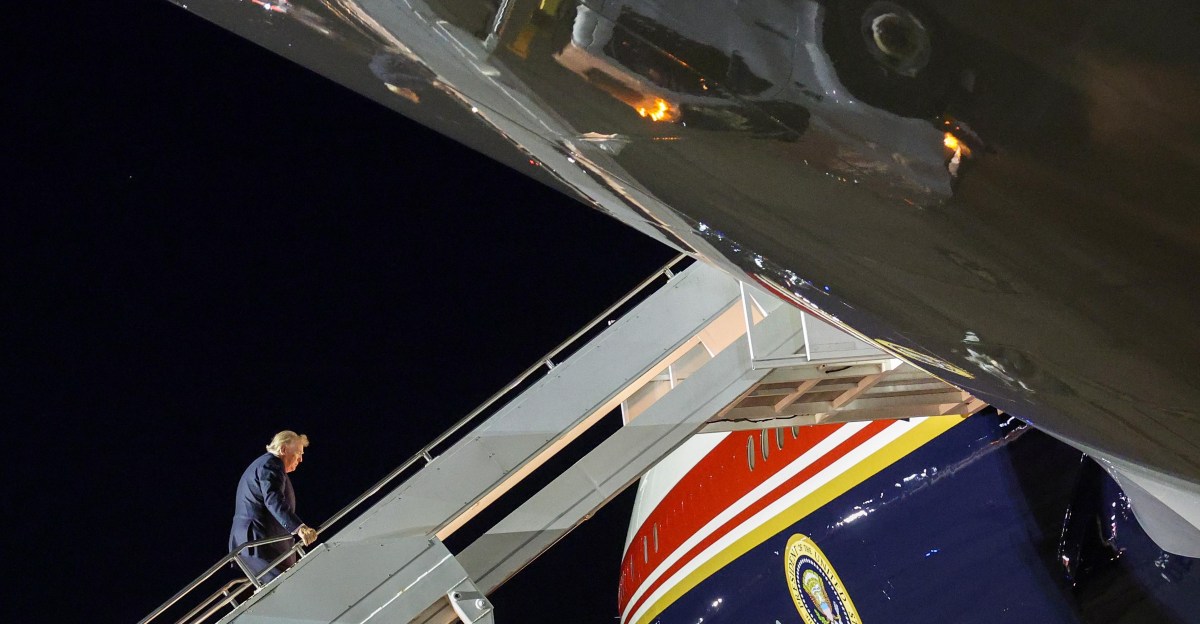
Administration officials revealed on Monday that, before a flight from Turkey to the United Kingdom last month, President Donald Trump used the truck to secretly move between planes, then switched aircraft again after landing in Britain.
The ruse deceived both Trump’s press corps and many of his staff, who weren’t warned of the last-minute plan in advance. But the deception was undertaken, officials said, in response to an assassination threat from Iran.
Such plots are one tool weaker powers can wield in asymmetric warfare, or conflict between unevenly matched opponents. Iran can’t strike the US homeland with conventional military force the way the US can strike Iran.
As the catering truck caper attests, however, that doesn’t put Americans entirely beyond Tehran’s grasp. Instead, Iran is finding other, less conventional ways to inflict damage on US turf — from assassination plots to cyberattacks.
We might need a bigger catering truck to escape all of that.
“We have more cybersecurity regulations for your credit card than we have for the nation’s water supply.”
— Joshua Corman, founder of I Am the Cavalry, a digital security nonprofit
Iran doesn’t appear able to launch the kind of major cyberattacks that would seriously disrupt Americans’ daily lives en masse. But over the past five months, attacks linked to Iran and pro-Iranian groups have targeted US medical device makers, social networks, public transit agencies, and — most recently, and perhaps most alarmingly — small-town utilities.
Unknown hackers compromised the water and wastewater systems of municipalities in at least 12 states last month, prompting water shut-offs, flooding and boil-water notices in a handful of locations. Cybersecurity experts think Iran is most likely behind the breaches. And American water systems — which are overwhelmingly run by small, local agencies — are especially vulnerable to this type of attack. They have little in the way of IT support, and relatively few state or federal laws require them to take cybersecurity precautions.
It isn’t just utilities at risk, either. Over the past 10 years, Iranian hackers have also breached US targets ranging from satellite companies to political campaigns. And if the war continues to stretch on, some analysts believe the country’s hacks could grow more aggressive.
The Trump administration hasn’t shown any great desire to address this risk, alas. Just a few months ago, it proposed $707 million in cuts to the US Cybersecurity and Infrastructure Security Agency — the people responsible for protecting the nation’s infrastructure from cyber threats.
➨ Ignorance can truly be bliss. Many of us feel the very modern compulsion to suck up all the information we can: about the news, about our bodies, about random subjects we encounter on the internet. But that deluge of daily data can overwhelm both your mental bandwidth and your mental health. Try letting go of some of these low-stakes tidbits so you can focus on subjects that most deserve your attention.
- Did you know…that pigs are smart enough to use tools without human prompting?
- Today’s trivia: Vientiane is the capital of which Southeast Asian country? (You can find this and other brain puzzles in Vox’s daily crossword. Look for the answer in tomorrow’s edition.)
- Yesterday’s trivia: Yesterday we asked you for Dorothy’s last name in The Wizard of Oz. That would be Gale. Author L. Frank Baum is believed to have borrowed the name from either the victim of an 1879 tornado or his late infant niece, who died in 1898 at just over five months old.