
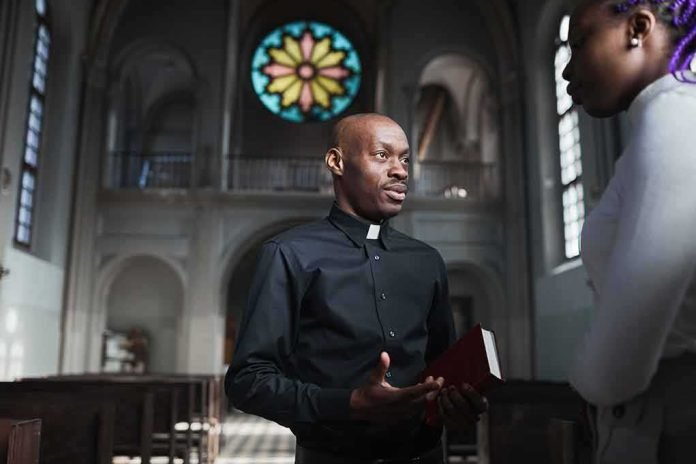
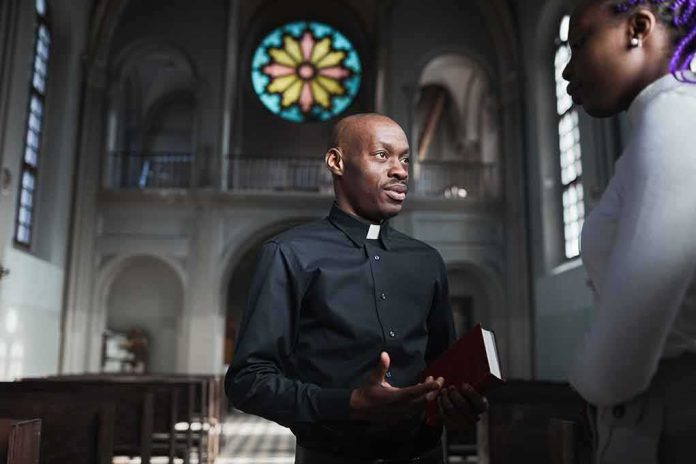
A 67-year-old priest from Culiacán was kidnapped, burned, beaten, threatened with death for three days, then returned home alive.
Story Overview
- The Diocese of Culiacán confirmed the kidnapping, abuse and three-day captivity.
- The priest returned on October 27 and received medical treatment for visible injuries.
- The kidnappers demanded information he did not have, then increased the violence.
- The bishop called for justice and called the security record in Sinaloa insufficient.
What happened to Father Clemente Morales
The Diocese of Culiacán reported that Father Clemente Morales Topete was arrested on October 24 by unidentified men and detained in an undisclosed location. Diocesan leaders said he was beaten, burned and threatened with death repeatedly over three days. The kidnappers demanded information he did not know; the violence escalated when he was unable to provide it. The diocese’s story formed the backbone of media coverage and prompted calls for action from Sinaloa Church leaders.
The priest reappeared on October 27. Local press reported that he returned to his Cristo Resucitado parish in his own vehicle, with bruises and skin marks that required medical evaluation. Another report released the same day said authorities and church staff helped him and he was “safe” immediately afterward. The basic sequence – kidnapping, three days of abuse and return – was repeated across all media outlets, each citing the diocese and Bishop Jesús José Herrera Quiñones.
The Church’s Narrative and Why It Landed
The diocesan circular, signed by the bishop and chancellor, presented a clear chronology and description of the injuries: taken on October 24, mistreated during detention, returned on October 27. She noted that unknown kidnappers demanded information and threatened to kill him when he could not respond. The bishop’s office has not named any suspects and asked the public to avoid speculation while investigators work. This restraint gave credibility to the story while remaining focused on the victim and the demand for justice.
Bishop Herrera went beyond the single case. He linked the ordeal to continued insecurity in Sinaloa and demanded tougher results from state authorities. He cited disappearances and feminicides as proof that current strategies are not enough and called for a firmer, results-oriented approach to protecting ordinary people, including clergy who serve in poor and high-risk areas. It’s a sober statement that falls within the framework of common-sense priorities: safe streets, accountable policing and swift justice.
The model that makes this matter familiar
The attack is part of a broader context in Mexico, where priests, pastors and other religious leaders face threats, kidnappings and killings linked to criminal violence. A research effort recorded 211 attacks on religious leaders between 2006 and 2024, with the annual average doubling in recent years. The United States Department of State has also documented continued attacks and kidnappings of clergy by unidentified assailants, often in high-crime areas. Father Morales’ case aligns with these long-term risks.
News outlets that cover Church affairs, both in Mexico and abroad, echoed the bishop’s account. They reported burnings, beatings and death threats, and stressed that the priest’s life was in real danger during the three days of his detention. The consistent narrative of these reports, anchored in the diocesan statement, has helped cut through the noise that often surrounds coverage of violent crime in Mexico, where rumors can trump facts.
What Accountability Should Look Like Now
Authorities have a clear path forward: secure the investigative file, collect medical documents and use surveillance, phone data and witness interviews to chart the October 24-27 route. This is the norm, not a new thing. It is also urgent because violent actors view silence as permission. The bishop’s call for better security outcomes in Sinaloa aligns with conservative instincts: protect the innocent, punish the guilty and make the streets safer for worship, work and family life.
Mexican priest Father Clemente Morales Topete was beaten, burned and threatened with death after being kidnapped by a group of unknown men who held him captive for three days.
Bishop José de Jesús Herrera Quiñones, of the diocese of Culiacán, in the state of Sinaloa, reported what… pic.twitter.com/HclHd6A3Y4
– EWTN News (@EWTNews) November 4, 2026
Church leaders thanked officials who helped locate the priest, but gratitude does not end their duty. The case demands visible steps toward arrests and a trial. The goal is simple and serious: a consequence that signals to potential captors that harming a priest – or any citizen – carries a cost they are unwilling to pay. A brief note is common in such cases: Public reports have not named the kidnappers and the investigation remains active.
Sources:
lifesitenews.com, zenit.org, pillarcatholique.com, moncharisme.com, infobae.com, noroeste.com.mx, ewtnnews.com, lasillarota.com, tecscience.tec.mx
Source link
