
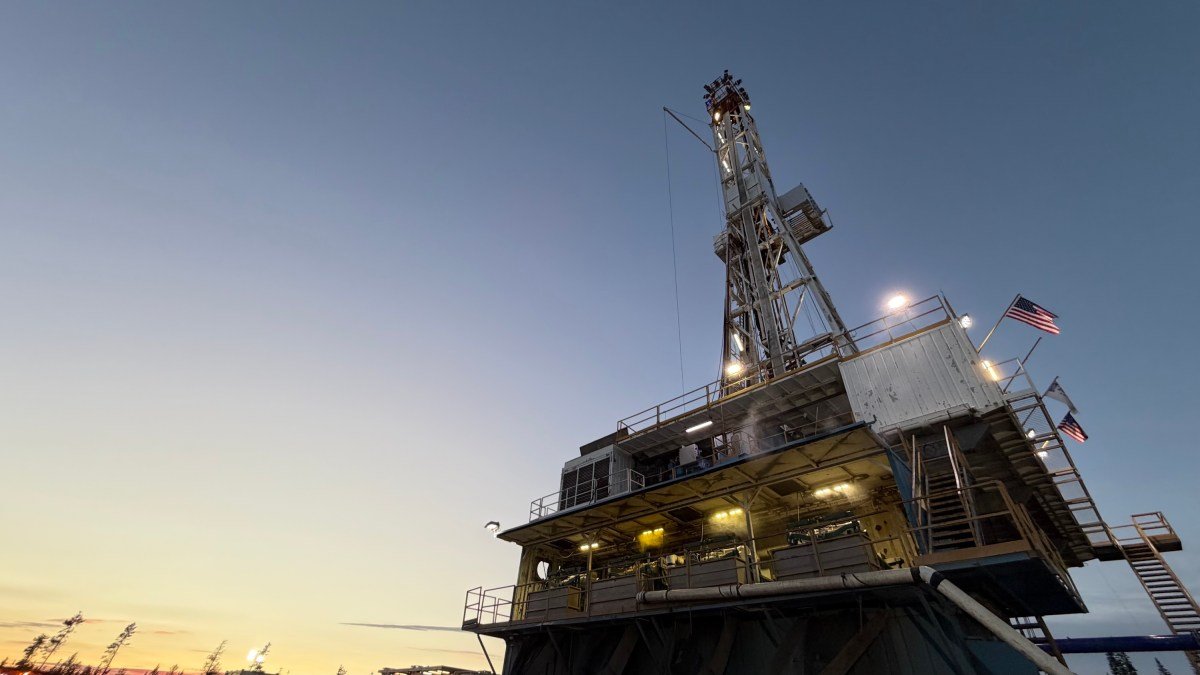
Geothermal startups are racing to see who can tap into the deepest, hottest rocks. The winners can power the next phase of the network, data centers and everything.
The wider markets got their first taste of enhanced geothermal energy earlier this year when Fervo Energy went public. But this week was all about super-hot rock geothermal.
Geothermal energy has become a darling among investors, technology companies, and even the Trump administration. The basic technology has been around for decades, but advances in drilling techniques borrowed from the oil and gas industry have enhanced it. The United States also has a lot of potential Up to 57 TW of generating capacity, more than enough to power the next wave of AI data centers.
An emerging category of geothermal energy, known as superheated rocks, could help the industry unlock much of this potential.
The secret to extremely hot rock geothermal energy is what happens to water at extreme depths. As it approaches the Earth’s very hot core, the temperature and pressure rise significantly. When it reaches a high enough level, ordinary water turns into a supercritical fluid, a type of liquid gaseous state that can hold enormous amounts of energy. One extremely hot rock well can generate 15 megawatts of electricity or more.
Ultra-hot rock geothermal is moving closer to commercial reality. Energy Quiz He said Tuesday that he was Google fell As a customer. Hyperscaler said it will pay more than $500 million to secure 50 megawatts of power from the Quaise project in central Oregon, which will tap scorching heat at a depth of three miles.
Google is paying a premium for the amount of energy Quaise will save, but this is in line with the company’s strategy of reaching out early to potential suppliers. For example, he was an investor in Fervo and an early customer.
Meanwhile, on Monday, he supported Khosla Mazama Energy She announced that she had figured out how to keep drill bits cool while tapping on extremely hot rocks. And last week, XGS Energy He was Given the grant By the Department of Energy to develop materials, well designs, and models to improve reliability at depths where superheated rocks are present.
The XGS dips its toes into very hot waters, while the Mazama and Quise make it their primary focus, although they take very different approaches.
Quaise’s technology sounds like science fiction: Starting at a depth of about 2.5 miles, the company will replace its traditional drill bit with a gyrotron-powered one, bombarding rocks with millimeter-wave radiation and turning them to ash. The hope is that this technology could make drilling under extremely hot conditions cost-effective, something that is a challenge with traditional metal drill bits, which corrode faster at those temperatures.
On the other hand, Mazama believes that traditional drill bits would work well if they could be kept cool.
The startup’s newly announced technology, Carbon Chill, uses carbon dioxide instead of water-based drilling “mud” to keep the part cool. At those depths and temperatures, carbon dioxide turns supercritical, allowing it to retain large amounts of energy. Just above the drill bit, there is carbon dioxide2 It flows through a valve that looks like a rocket nozzle. When gas flows through the valve and expands at the other end, the expansion cools it rapidly, allowing it to absorb large amounts of heat. Company2 It also removes drilling cuttings as it travels to the surface, where it is filtered and reused.
Either way, Quiz and Mazama are betting that the technology they’ve developed can outperform modern commercial geothermal plants. By going deeper and hotter, they hope to extract much more energy from each well. Because drilling represents about a quarter to a third of a geothermal plant’s total costs, drilling fewer wells would make the project more competitive.
Investors are betting that these technologies will prove themselves soon. Quaise has raised more than $270 million from investors including Prelude Ventures, Collaborative Fund, and Engine Ventures, with Vinod Khosla stepping in as an angel investor, according to PitchBook. Mazama has raised $171 million from investors including Khosla Ventures, Doerr Capital and Bill Gates.
As with any new technology, there is some risk that new technologies will not pay off. But early results suggest it will. Mazama drilled its second well 80% faster than its first, and its2– Cooling technology reduced drilling time by another 20%, co-founder and CEO Sriram Vasantharajan told TechCrunch.
This, combined with Google’s vote of confidence in Quaise, suggests that the race for super-hot rock geothermal energy is heating up.
When you buy through links in our articles, we may earn a small commission. This does not affect our editorial independence.
