
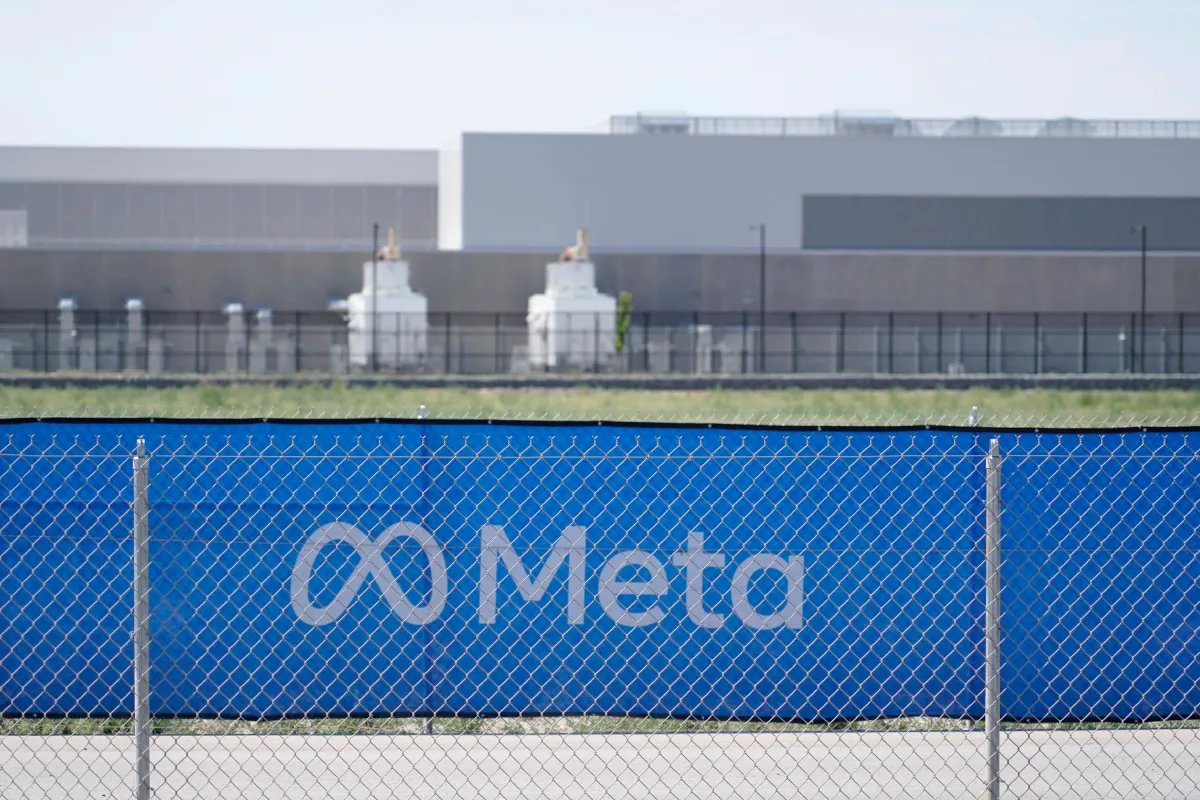
dead New sustainability report Buries the lead: The company will almost certainly miss its goal of reaching net zero by 2030, and it refuses to commit to a new timeline.
“We are re-evaluating our timelines, sequencing and interim milestones – including the 2030 timeframe for our net-zero emissions goal and near-term intensity targets – so our approach reflects current operating realities while keeping progress transparent on an annual basis,” Rachel Peterson, vice president of data centers at Meta, and Blair Swedin, global head of net zero emissions and sustainability at Meta, wrote in the introduction to the company’s 2026 Sustainability Report.
There’s a lot of word out there that Meta will continue to get dirty if it means it can keep putting out AI.
This is the danger of voluntary goals. Companies can make them and break them with little to lose, betting — often rightly — that they can ignore them with just a minor blow to public opinion, which is fickle anyway. (Remember the Cambridge Analytica scandal? Most people don’t.) There is almost no risk to the final result.
“We remain committed to net zero, but are re-evaluating the 2030 timeline and interim milestone. We will continue to invest in emissions reductions and report our progress annually,” a Meta spokesperson told TechCrunch.
A few years ago, Meta would have been one of the best climate stewards. The company has been one of the largest buyers of clean energy and has set ambitious water conservation goals.
But recently, its multibillion-dollar bet on natural gas at its Hyperion data center in Louisiana has undone much of that progress. Burning natural gas may be cleaner and more efficient than coal, but so can its global warming effect Just as bad When the leaky infrastructure needed to burn is taken into account.
Despite years of clean energy purchases, Meta’s greenhouse gas emissions have doubled in the past four years. Between 2024 and 2025, its data center emissions have increased more than 12-fold, and Hyperion has yet to go online.
This commitment to natural gas led to the company’s exit from RE100, a corporate renewable energy initiative, in July. The company has been part of the group for a decade, although the two split after RE100 began requiring more stringent reporting regarding renewable energy targets.
“When we set our goal of net-zero emissions, we expected steady growth, falling clean energy costs, and changes in the broader system that would enable progress at the pace we envisioned,” they added. “The reality has been far more complex. Demand for AI infrastructure has grown faster than almost anyone expected, arriving on a timeline measured in quarters rather than decades, and meeting that demand means building at a pace and on a scale the industry has never attempted.”
This is all true, but when you put it that way, it seems like Meta has little power in the matter. But the company’s decision to pursue AI was a conscious one.
You could argue that Meta has a fiduciary duty to go after its peers, who have also dabbled in AI. But there is precious little data to support the idea that AI will be a profit driver for a company like Meta, which is almost entirely consumer-focused.
CEO Mark Zuckerberg is Upbeat Improving Muse’s energy efficiency will change that, but how much would regular people be willing to pay for software that translates your improvised ideas into surreal memes? Or monitor your emails so you don’t forget to reply to your mom? Meta is betting that it will be enough to support a A $200 billion data centerAnd maybe more.
Choosing the fuel to power these AI ambitions was also a conscious choice. Natural gas power plants, besides their ability to operate 24/7, are actually not well-suited for AI data centers. Turbines like to run at constant speeds, while the power requirements of AI data centers rise and fall depending on the load. They need batteries as a buffer, which begs the question: why don’t we just connect to the grid and use the batteries to fill any gaps during times of peak demand? This is what an expert recommends.
It seems that Meta’s bet on natural gas is not at the right time. Long-term energy storage is Coming by itself Geothermal energy appears poised to become the next major energy source on the grid in the United States. Companies like Fervo, Mazama and Quise have achieved significant milestones very quickly, potentially unlocking tens of gigawatts of capacity. The technology is not competitive with natural gas today, but it is Very well it could be In the mid-2030s, only a few years after the Meta completed Hyperion. Geothermal energy is also not vulnerable to supply chain shocks, such as what happened with natural gas and the Iran War.
Moreover, the company’s decision to abandon its 2030 net-zero goal threatens to spark the kind of backlash that leads to regulation with real power. Such regulations would not only apply to meta, but the broader industry would be justified in frustrating them.
In light of this, Meta’s timing couldn’t be worse. Polls show the general public is not holding up Amnesty International or Data centers We rightly appreciate that infrastructure development leads to a rapid and often unchecked expansion of polluting infrastructure.
The technology industry has spent more than a decade trying to prove that it will be different from previous industrial powerhouses like oil and gas or the auto industry. In one PDF, Meta may have undone a lot of those good intentions. After that, who would trust another tech company’s voluntary goals?
When you buy through links in our articles, we may earn a small commission. This does not affect our editorial independence.
