
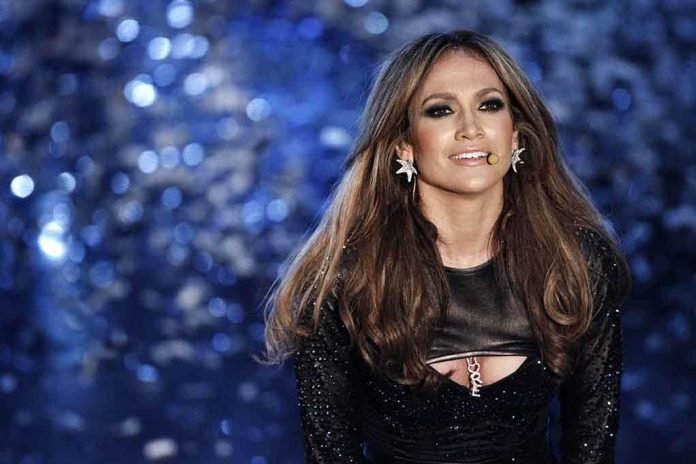
Jennifer Lopez’s claim that Hollywood gave her fewer chances because she “wasn’t the typical type of white actress” isn’t a complaint about her own career alone — it’s a data point within one of the entertainment industry’s most documented disparities, and the attempt to refute it by pointing to her wealth and filmography misunderstands what the claim is actually asserting.
Key Points
- Lopez told The New York Times that she was offered “only a few things” early in her career and had to “create things” for herself because she was not seen as a typical white actress; she made similar remarks to Variety about being pigeonholed into “the Latin girl” roles.
- His account is a testimonial — there are no casting notes or audition logs in public records linking a specific lost role to his ethnicity — but it closely matches large-scale academic data on Latino casting.
- USC Annenberg research covering more than a decade of hit films found that Latinos held about 3 to 4.5 percent of lead roles, compared to a population share closer to 18 to 20 percent.
- Critics, including Tomi Lahren, have argued that Lopez’s more than 40 films and net worth of approximately $400 million refute this claim, but this rebuttal is about her outcome, not the mechanism she described.
- Lopez’s own career – winning the role of Selena over more than 20,000 competitors and reportedly becoming the first Latino actor to pay $1 million for a film – is itself cited by both her supporters and detractors for opposing conclusions.
What Lopez actually said
The statement causing the controversy is narrow and specific, and not a blanket statement that she “can’t get a job.” In her New York Times interview, Lopez said, “Even early on in my career, I was offered things, but I was only offered a few things. I had to kind of create things for myself. And the reason, I think, was that I just wasn’t the typical, to be honest, kind of white actress.” Years earlier, in a conversation with Variety, she had been more explicit about what that limitation looked like, recalling an industry mindset that treated her as “the Latin girl” who would “play Spanish roles,” “play maids” and remain boxed into stereotypical roles. She further described having to convince the gatekeepers – “the agents, the managers, the Tommy Mottolas of the world” – that she could do more than what was offered.
This is a statement about the menu of roles she was presented with, not whether she ultimately worked. Both things can be true at once: an actor can be under-delivered compared to his peers and still, through perseverance, talent and self-generated projects, build a huge career. Lopez’s own story describes exactly this path: She says she had to create opportunities herself rather than wait for the industry to expand them.
Why the “She’s rich, so she’s wrong” rebuttal misses the point
The strongest reaction — from commentators like Tomi Lahren and Adrianne Curry-Rhode, and amplified in media outlets highlighting her net worth — rests on a single logical move: citing her box office success and 40-film resume as proof that she wasn’t limited. It’s true that Lopez broke out with Selena and Anaconda in 1997, followed by hits such as The Wedding Planner, Maid in Manhattan and later Hustlers, with a combined filmography grossing well over $3 billion worldwide. But none of this contradicts his claims. She doesn’t dispute that she ended up working constantly; she describes the kind of roles she was offered by default and the personal efforts it took to escape the path of “maids” and “Spanish girls” early in her career. Pointing to his subsequent success as a rebuttal confuses the outcome of a fight with proof that the fight never happened.
It’s also worth noting that the strongest piece of evidence cited by her detractors—Selena’s breakthrough and reported $1 million salary—is at the same time Lopez’s own example of the barrier she describes: She says she beat out more than 20,000 other actors for the role and thereby became the first Latina artist to reach that salary milestone. A milestone described as historic is, almost by definition, proof that the previous standard was exclusive.
What the industry-wide data shows
Lopez’s testimony fits into a much larger and more rigorously measured pattern. The USC Annenberg Inclusion Initiative, which examines more than a decade of blockbuster films, has repeatedly found that Latino performers occupy a number of lead and co-lead roles — estimates ranging from about 3 to 4.5 percent across different study periods — even though Latinos make up nearly a fifth of the U.S. population. A separate UCLA Hollywood Diversity report on major 2024 theatrical releases estimates that Latino representation in leading roles is just 1 percent. Behind the camera, the deficit worsens: Hispanic and Latino professionals made up a similarly small share of casting directors during the same period, a detail that matters because casting directors are the gatekeepers who decide which actors will be seen for a role, let alone star in it.
It is within this structural context that Lopez’s personal narrative must be read. There are no statistics to prove she was denied a particular role because of her ethnicity – the available public record does not include casting notes or studio memos specifically naming her. But when an actor describes being framed in stereotypical elements early in his career, and that description fits a measurable, decades-spanning industry pattern rather than contradicting it, the claim gets the benefit of the doubt that an isolated anecdote wouldn’t do.
What remains unresolved
Honest assessment requires recognizing the limits of what is provable here. Lopez has not named the specific executives who rejected her for specific roles, and no one has released casting details or audition sheets that would allow researchers to test her account role by role. Sector data establishes a trend at the aggregate level; he does not establish causation in any case, including his own. What can be said with certainty is that her description of being pigeonholed into narrow, ethnically coded roles reflects a disparity that independent researchers have systematically measured for nearly two decades — and that her critics’ rebuttal, based on her subsequent commercial success, answers a question she never asked.
JENNIFER LOPEZ SAYS BEING LATINA MAKES IT HARDER TO GET ROLES IN HOLLYWOOD
Jennifer Lopez says she had fewer acting opportunities because she didn’t fit what she describes as the “typical” mold of white Hollywood actresses. She made the comments during an interview with The New York… pic.twitter.com/h13Zzk1qI0
– Autumn Rivers (@Autumn_Rivers4) November 23, 2026
The big picture for an industry that still matters
Lopez’s remarks come at a time when Latino advocacy groups, including signatories to an open letter following a separate 2026 casting controversy, have pushed Hollywood to treat representation gaps as a solvable production problem rather than a market inevitability. The debate sparked by his comments illustrates a recurring pattern of reception: accounts of historical barriers are weighed against a celebrity’s current wealth, as if success later in a career retroactively erases the narrower set of options offered earlier. The more useful question – which the available evidence can actually answer – is not whether Jennifer Lopez was successful. She clearly did. It’s about whether the industry she’s succeeded in still offers Latin artists the same range of debut deals that it offers everyone else. On this issue, it is the aggregate data, not the box office ledger, that constitutes the relevant evidence.
Sources:
facebook.com, abcnews.go.com, foxnews.com, netflixjunkie.com, x.com
Source link
