
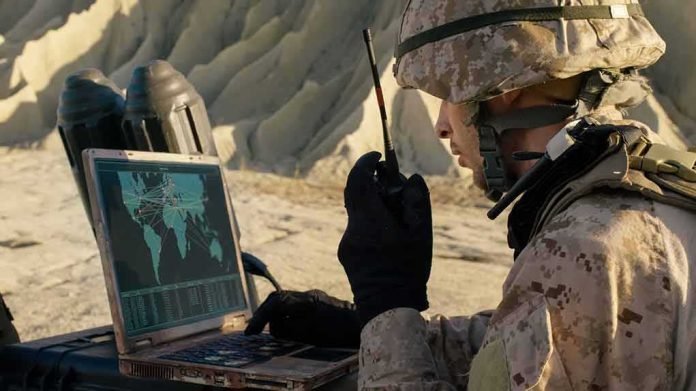
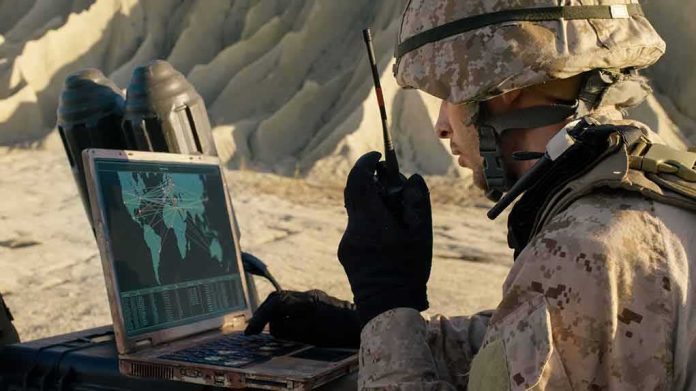
The essential fact is not in dispute: An active-duty U.S. Army sergeant admitted to participating in a paid scheme to obtain and transmit national defense information to China-linked buyers. This case shows how modest access, mundane equipment and opportunistic brokering can still compromise sensitive military hardware – this is not a spy novel, but a real vulnerability within a modern force.
At a glance
- An Army supply sergeant stationed at Joint Base Lewis-McChord has pleaded guilty to conspiring to collect and transfer national defense information to individuals linked to China.
- Prosecutors described a sustained scheme from late 2021 to March 2025 involving a named co-defendant who also pleaded guilty.
- Materials included excerpts from HIMARS technical manuals, photos of restricted presentations, and government computer and hard drive offerings.
- The financial forfeitures and cash seized reinforce that the conduct was intentional and commercial and not unintentional.
What Zhao admitted – and why it matters
According to the Department of Justice, Jian Zhao, 37, pleaded guilty to conspiracy to collect, transmit and transfer national defense information to individuals linked to China. The DOJ identifies Zhao as an active-duty Army battery supply sergeant who enlisted in 2017 and served at Joint Base Lewis-McChord in Washington. The government’s timeline places the plot between approximately November 2021 and March 2025, presenting it as a sustained operation rather than a simple failure. A co-defendant, former army soldier Ruoyu Duan, is described as the link between the China-based buyers and the payment facilitator; Duan separately pleaded guilty earlier in 2026, providing further corroboration of the network the government claims Zhao joined.
What Zhao moved was revealing: not war plans or human-derived identities, but the granular material that makes complex systems usable. Regional coverage based on court filings reported that Zhao provided excerpts from High Mobility Artillery Rocket System (HIMARS) technical manuals, photographed presentations and restricted documents, and offered the government’s computers and hard drives for sale. This mix – know-how, visual captures and physical media – corresponds to contemporary internal cases in which the reward comes from enabling an adversary to understand, imitate or counter US capabilities at the level of procedures and components rather than big secrets.
System mechanisms: access, brokerage and money
Supply sergeants live at the intersection of logistics and unit readiness. They manage property records, control sensitive items and know where devices and documentation are located. This role can ensure proximity to restricted technical topics, even without extensive permissions. According to the government, Zhao exploited precisely this proximity. The alleged brokerage layer – Duan connecting Zhao to buyers in China and managing financial flows – is also familiar: espionage rarely travels in a straight line from the source to the foreign service; it tends to pass through intermediaries and cutouts that whitewash both identity and intent.
Money is often the most lasting evidence of intent. Here, the DOJ and news reports describe that Zhao agreed to forfeit $17,500 in conspiracy proceeds and relinquished any claim to approximately $30,000 seized during the search — numbers consistent with a pay-to-play pipeline, not accidental mismanagement. In such cases, financial records become the backbone that connects otherwise disparate acts: photographs taken here, a file transmitted there, a device offered for sale later — all cohesive as transactions in a market for sensitive U.S. military hardware.
What is charging and what it is not
Zhao argued for a conspiracy to collect and transfer national defense information to individuals linked to China — a formulation rooted in the Espionage Act’s protection of “national defense information” (NDI), which is broader than just documents stamped with a classification mark. The NDI includes information closely held by the government that, if disclosed, could harm the national defense; Courts have long treated both formally classified documents and certain unclassified but sensitive documents as potential NDI, depending on their content and treatment. DOJ public statements do not list classification levels or item-by-item identifiers, which is common at the pleading stage when damage assessments and specific exhibits may remain restricted.
Accuracy regarding recipients is equally important. The DOJ describes them as “China-linked individuals” and public documents cited in the report do not name the buyers or explicitly characterize them as agents of the Chinese state. The legal significance remains: A U.S. service member conspired to obtain and send protected defense information to actors linked to a foreign power. But the case, as it has been publicly described, targets the plot and the transfers themselves rather than purporting to prove the recipient’s organizational chart.
How this case fits into the broader national security landscape
Cases like Zhao’s are part of a visible and growing trend in federal law enforcement. The U.S. Sentencing Commission counted 258 convicted national defense offenses among more than 64,000 federal cases in fiscal year 2023; in fiscal year 2025, the Commission’s summary counted 517 such cases out of 66,662 — a sharp increase in national defense offenses prosecuted as part of the federal docket. These numbers measure conviction outcomes, not the universe of espionage attempts, but they show a law enforcement process that has become busier and, therefore, more public. Most defendants in this category receive prison sentences, with average sentences measured in years, underscoring the criminal justice system’s treatment of these crimes as serious and distinct from routine errors.
On the threat side, research institutes and government agencies have repeatedly rated the People’s Republic of China as a rapid collector in all domains: human, cyber, and commercial. Although each case depends on its own facts, this strategic context explains the market’s attraction to smaller internal schemes. A photograph from a restricted slide show, an excerpt from a technical manual, or a government hard drive can be cross-referenced with open source material and other illegally obtained fragments to build the mosaic of an adversary’s U.S. capabilities—a cumulative value that far exceeds the apparent sensitivity of any one item.
November 23: Jian Zhao, an active-duty U.S. Army sergeant stationed at Joint Base Lewis-McChord in Washington, pleaded guilty to conspiring to collect, transmit and transfer national defense information to individuals linked to China.
The charge carries a maximum sentence of 10 years… https://t.co/yAVNeilWgB pic.twitter.com/tIq0nW9mH0
-Byron Wan (@Byron_Wan) November 24, 2026
Consequences and next steps in Zhao’s case
A guilty plea resolves many factual disputes and focuses the case on sentencing: how the court will evaluate the duration of the conspiracy, the nature and volume of the material transferred, the financial gains, and any cooperation or acceptance of responsibility. Public DOJ filings and regional reports indicate both a co-defendant’s corroborative plea and tangible proceeds – two aggravating factors that typically matter when sentencing in national defense cases. Legally, conspiracy carries substantial penalties; In recent similar cases involving transfers to China-linked actors, courts have imposed multi-year prison sentences calibrated according to the severity and scale of the behavior.
Two institutional lessons come up. First, insider risk doesn’t fit perfectly with the job title. A supply NCO without an intelligence billet was always close enough to restricted documentation and equipment to monetize access. Second, low-friction technologies (smartphone cameras, encrypted messaging, peer-to-peer payments) reduce logistical barriers to the exfiltration of sensitive content. Counterintelligence programs that once focused on empowered analysts must now reinforce the seemingly pedestrian boundaries of military organizations: who can see and copy technical annexes, how removable media are controlled, which telemetry device triggers an alert when a presentation is photographed.
What to watch
Three practical markers will indicate how the court and the military interpret this case. First, the length of the sentence: this will indicate how the judiciary evaluates the materials in question, even in the absence of publication of an assessment of damages. Second, any credit for cooperation for Zhao or Duan: This would indicate that investigators view the network as broader than that of the known defendants. Third, corrective measures at Joint Base Lewis-McChord and beyond: strengthened control of restricted submissions, stricter management of government hard drives and computers, and updated training on the legal definition of national defense information. Everyone would recognize the same uncomfortable truth that this affair revealed: the soft underbelly of military secrecy is often procedural rather than exotic.
Sources:
militarytimes.com, justice.gov, kptv.com, koin.com, armytimes.com, Ilseshivaworld.com, kyivpost.com, rand.org
Source link
