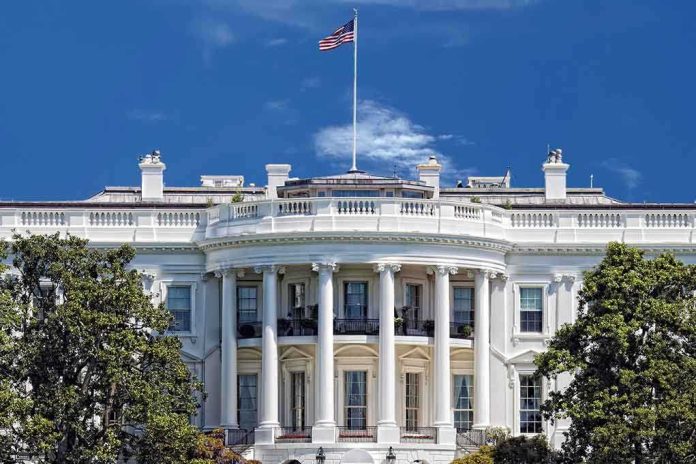
North America’s most wanted drug lord is dead in a shootout on a Mexican mountain, and the White House just admitted that America pulled the intelligence strings that allowed it to happen.
Story Overview
- Mexican special forces killed Jalisco Cartel leader El Mencho on February 22, 2026, in Tapalpa, using intelligence provided by the United States from a specialized joint task force.
- The White House confirmed that America delivered the target package without having troops on the ground, marking an unprecedented public acknowledgment of cross-border intelligence collaboration.
- The cartels responded by blocking more than 250 roads and burning vehicles in 20 Mexican states hours after the raid.
- The operation killed seven cartel members in total, injured three Mexican soldiers and marked a radical departure from Mexico’s previous cartel non-intervention policies.
- El Mencho evaded a $15 million bounty from the DEA for decades while leading Mexico’s most violent drug trafficking organization, responsible for the U.S. fentanyl crisis.
Intelligence sharing innovates in cartel warfare
The White House confirmation came via spokesperson Karoline Leavitt’s statement on the evening of February 22, hours after Mexican forces stormed the Jalisco mountain stronghold of El Mencho. The intelligence package comes from the Interagency Cartel Task Force, launched just a month earlier, in January 2026. This public acknowledgment represents a sea change from decades of quietly coordinated operations. Deputy Secretary of State Christopher Landau congratulated Mexican forces while highlighting bilateral success. The US Embassy said Mexican troops planned and executed the entire operation, with the US contribution strictly limited to intelligence. No U.S. personnel set foot on Mexican soil during the raid.
The Fentanyl Empire Builder Who Finally Ran Out of Hiding Places
Nemesio Oseguera Cervantes made the new generation of Jalisco cartel, from a Sinaloa dissident group created in 2009, the most powerful criminal organization in Mexico. His empire trafficked fentanyl and methamphetamine while branching out into fuel theft and oil smuggling. The cartel’s brazen assassination attempt on security czar Omar García Harfuch in 2020 using grenades demonstrated its willingness to directly target government officials. El Mencho watched his organization collapse piece by piece as American authorities dismantled his entourage. His son Rubén was sentenced to life in September 2024, his ally Abigael González was extradited in August 2025, and DEA agents arrested 670 CJNG members in the United States in September 2025.
Pressure from Trump administration reshapes Mexico’s counternarcotics strategy
President Trump’s February 2025 designation of CJNG as a foreign terrorist organization was a complete game-changer for the administration of Mexican President Claudia Sheinbaum. The terrorist label combined with tariff threats forced Mexico to abandon its previous “hugs, not bullets” approach to cartel violence. Sheinbaum has deployed 10,000 troops to the border and extradited about 100 gang members in recent months. Operation Tapalpa demonstrates Mexico’s new willingness to engage in direct military confrontations with cartel leaders. This aggressive position meets a dual objective: to dismantle criminal networks while proving to Washington that Mexican forces can ensure internal security without American troops crossing the border.
Cartel retaliation reveals organizational reach in Mexican territory
Hours after El Mencho’s death, cartel members set up more than 250 roadblocks in 20 Mexican states. Burning vehicles created choke points on major highways as armed law enforcement clashed with authorities trying to restore order. The Mexican Army and National Guard deployed reinforcements throughout Jalisco and neighboring states on February 23. Three soldiers were injured in the initial raid when cartel gunmen tried to repel the assault. Authorities arrested two cartel members amid the chaos while lifting blockades. The geographic scope of the simultaneous retaliation demonstrates CJNG’s continued operational capacity despite the loss of its founder, raising questions about succession plans and organizational resilience.
Power vacuum creates dangerous opportunities for rival criminal organizations
Analyst Tony Mora warns that El Mencho’s death creates immediate risks as rival cartels eye expansion of CJNG territory. The Sinaloa cartel and other competitors could attempt to seize drug trafficking routes, extortion rackets and smuggling corridors previously controlled by Jalisco agents. Short-term violence typically escalates during leadership transitions, as lieutenants fight for control or turn to competitors. The weakened CJNG faces internal fractures without El Mencho’s authority holding the factions together. Communities in Jalisco, Tamaulipas and Michoacán bear the brunt of this violence as cartels fight for territorial dominance. The long-term implications depend entirely on whether U.S. and Mexican forces maintain pressure on successor leaders or allow reorganization.
Bilateral cooperation model avoids sovereignty hot spots
Operation Tapalpa establishes a model for future collaboration that respects Mexican sovereignty while leveraging U.S. intelligence capabilities. Mexico maintains full operational control, with its forces executing the mission from planning through completion. The United States contributes surveillance, signals intelligence and target tracking without deploying personnel across the border. This arrangement addresses Mexican concerns about U.S. military intervention while satisfying Washington’s demands for aggressive disruption of the cartel. Former U.S. officials call the intelligence program comprehensive, providing real-time location data and operational models. The model reduces the flow of fentanyl into U.S. communities without the political complications of cross-border raids or drone strikes on Mexican territory.
Fentanyl Crisis Leads to Unprecedented Collaboration Against Cartels
Fentanyl-related deaths in the United States provided the political pressure that forced both countries to take aggressive action against CJNG leaders. El Mencho’s organization dominated fentanyl production and distribution networks, fueling addiction epidemics in American cities. The potency and profitability of the synthetic opioid has made CJNG extraordinarily wealthy while killing more than 70,000 Americans each year at its peak. Trump’s terrorist designation reflects a growing political consensus that cartels represent threats to national security rather than just law enforcement challenges. The DEA’s $15 million bounty on El Mencho signaled his priority status among traffickers. His death disrupts established supply chains and forces CJNG leaders into hiding, although experts warn that trafficking networks quickly adapt to leadership losses.
Sources:
Mexico fears more violence after army kills ‘El Mencho’ cartel leader – OPB
How the U.S. Helped Mexico Kill Drug Cartel Leader El Mencho – TIME
Source link