The 2026 World Cup has been one filled with both excitement and controversy. Though there’s been a lot of entertaining soccer, there’s also been plenty of outrage.
Everything from on-field decisions — with ever-meddlesome VAR reviews making controversial calls throughout the tournament — to off-field visa concerns has been tinged by controversy and debate. FIFA has stepped in to handle everything, even Mother Nature, receiving scrutiny for decisions consequential and baffling alike.
Advertisement
Here are some of the biggest controversies that have arisen at the World Cup since the start of the tournament.
Omar Artan denied visa
The World Cup controversies began before the tournament even started, as Somalian referee Omar Artan was denied entry into the United States. The denial came as a result of the U.S. government’s crackdown on immigration under President Donald Trump: Under a travel ban signed by Trump in 2025, citizens from nearly 40 countries, including Somalia, are not able to enter the country.
Artan, a well-respected referee with experience in multiple high-level African matches, was then forced to return home, but was welcomed by supporters and government officials. Artan would have been the first referee from Somalia to officiate a World Cup.
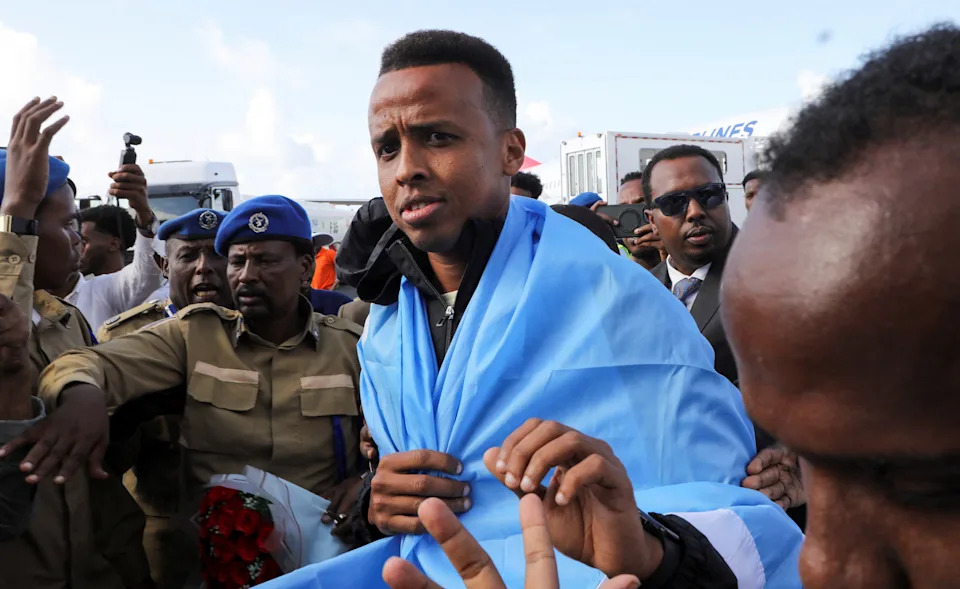
Omar Artan is greeted after returning home to Somalia.
(REUTERS / REUTERS)
When speaking on the issue, FIFA said, as with previous World Cups, visa situations are left up to the host countries, with FIFA president Gianni Infantino saying they “don’t control everything.” (FIFA did end up paying Artan in full.)
Advertisement
Iran’s treatment amid war with the U.S.
The Iran national team was put in the difficult situation of playing a World Cup in the United States, a country actively waging war against its homeland. And throughout the tournament, Iran’s experience was affected by outside factors.
After initially planning to be based in Arizona, Iran switched their base camp to Tijuana, Mexico, citing concerns over getting visas to enter the U.S.; though the team was able to enter both countries, a number of coaches and support staff had their visa applications denied. The team was also forced to travel back to Tijuana immediately after all three of their group stage matches, all of which were in the U.S. — two in Los Angeles, one in Seattle.
After Iran’s 1-1 draw with Egypt, captain Mehdi Taremi told reporters Infantino had visited the team in the locker room during their first group stage group game to assure them things would get better. But, Taremi said, nothing changed over the course of the tournament.
Advertisement
“It’s a disaster World Cup,” Taremi said.
Iran ended up falling one spot short of advancing to the knockout round, after a series of unlucky draws in the group stage.
FIFA’s political elements policy
Under FIFA rules and regulations, countries and fans are prohibited from displaying political elements. But the enforcement of that policy has led to some controversial results.
Before the tournament, Haiti was required to alter its jerseys, which included an image of fighters raising a flag at the Battle of Vertières, the final stage of the Haitian Revolution and a battle that led to the country’s independence in 1803. FIFA deemed the image to be too political, in what a Haitian spokesperson called “a misinterpretation.”
Advertisement
Some fans of the Iranian team tried to bring in pre-revolutionary flags, showing a golden Lion and Sun emblem rather than the Islamic Republic symbol at the center. But, while some were able to smuggle the flags into the stadium, many had their flags seized at the gates as part of FIFA’s policy.
Argentina has seemed to test the bounds of that policy: After its win over England on Wednesday, the team held up a banner invoking the Falkland Islands, a disputed territory off the coast of Argentina that is currently under British rule. As of now, FIFA has not punished Argentina for the banner.
The hydration breaks
Another great point of controversy is the hydration breaks, which have been maligned by players and coaches alike throughout the tournament. The three-minute breaks in the middle of each half — which also paves the way for additional advertising on broadcast channels — have been booed by fans in the stadium from the start.
Advertisement
Norway coach Ståle Solbakken called the breaks “unnecessary.” French manager Didier Deschamps said that they split the game into “almost four quarters.” Netherlands captain Virgil Van Dijk, who said that he wasn’t a huge fan of the commercial breaks on TV, added that it would be better if FIFA opted to “look at it in every game, separately” to decide whether a break was necessary.
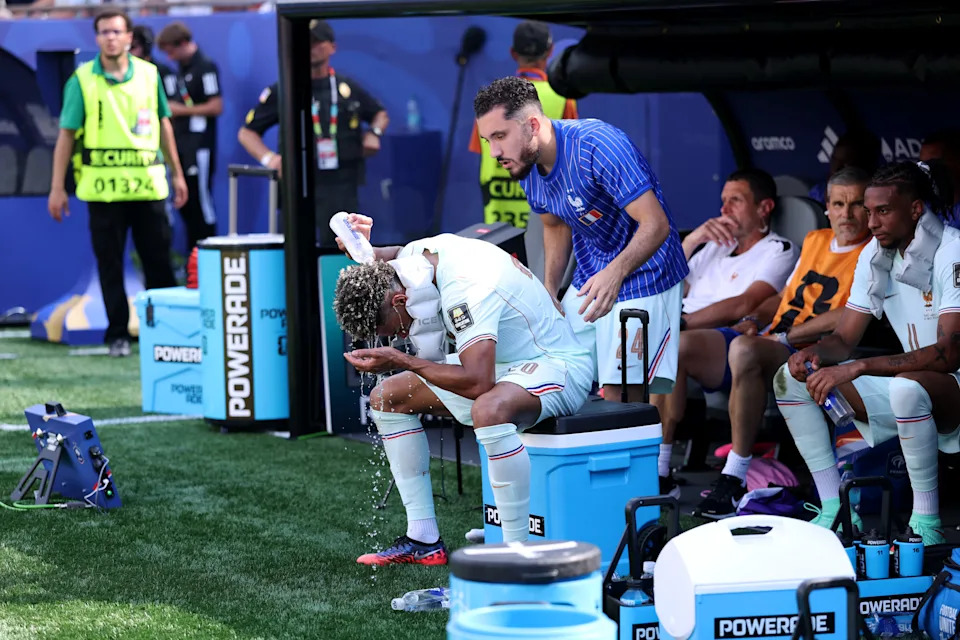
(Michael Regan – FIFA via Getty Images)
As the tournament has gone on and games have gotten hotter — like the quarterfinal between England and Norway, held on a muggy evening in Miami — the breaks have been more appreciated. But cooling breaks in other games, in indoor stadiums, cool climates or sunless evenings, have been met with scorn.
Jérémy Doku leaves the tournament to welcome his first child
During the group stage, Belgian forward Jérémy Doku left the team to be present for the birth of his first child. While flying back to England to join his wife for the birth, Doku missed Belgium’s second group stage match, a scoreless draw with Iran in which the Red Devils went down to 10 men.
Advertisement
The decision to leave was met with baffling criticism, especially from local media, who accused Doku of putting his family ahead of the team. Doku returned to the team ahead of Belgium final group stage match against New Zealand, which they won handily.
Canada’s dominant win over Qatar took a turn in the second half after Assim Madibo made a poor tackle on Ismaël Koné that broken the Canadian midfielder’s leg. Koné was quickly stretchered off the field with his leg in an air cast. Madibo, who looked visibly distressed as Koné was receiving treatment, was assessed a red card after VAR review. Canada head coach Jesse Marsch said that the Qatari midfielder came to Canada’s locker room to apologize to Koné before he went to the hospital.
After reviewing the play, the FIFA disciplinary committee imposed a five-match ban for what it deemed serious foul play. With Qatar failing to advance past the group stage, Madibo’s suspension will roll over to future games.
Advertisement
Mexico’s controversial chant makes an appearance
A controversial chant used by Mexico fans made its return to the World Cup during the group stage. At least three times during Mexico’s win over Czechia, the chant — which features an anti-gay slur as opposing teams take goal kicks — could be heard from fans of El Tri.
The chant has been shouted by fans for 25 years, and has cost the Mexican federation hundreds of thousands of dollars in fines. This time, though, Mexico may have gotten away with it: FIFA did not immediately punish the federation, and fans appear to have stopped saying the slur after that match.
Ecuador wins despite a missed high boot foul
With a chance to advance to the knockout stage on the line, Ecuador conceded a goal to Germany in the first two minutes of their final group stage game. But in the run up to the goal, there was a clear missed high boot from German midfielder Aleksandar Pavlović, who lifted his leg in the face of Ecuador’s Pedro Vite to wrangle the ball.
Advertisement
In the end, though, it didn’t matter, as Ecuador equalized just seven minutes later and scored again in the second half to secure a knockout berth.
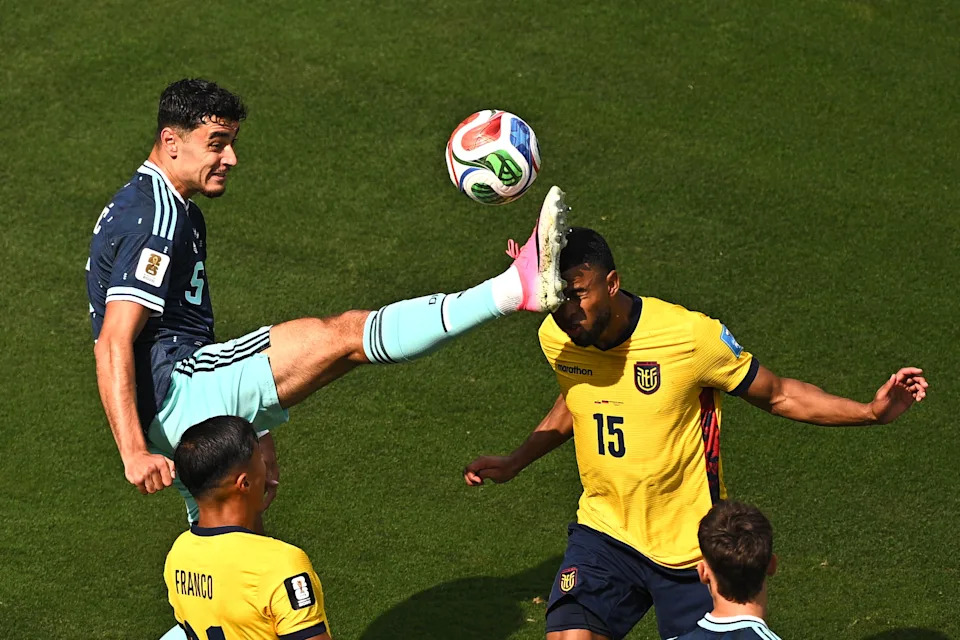
Aleksandar Pavlović (L) goes for the ball with a high boot toward the face of Pedro Vite.
(picture alliance via Getty Images)
Paraguayan broadcaster gets his credential revoked
In the middle of the group stage, broadcaster Jorge Chipi Vera had had his credential revoked after a profane rant against FIFA during Paraguay’s win over Türkiye. The rant came after referee Ivan Barton gave Paraguay’s Miguel Almirón a red card for covering his mouth while speaking to a Turkish player; Almirón’s ejection was the first use of the rule, which was design to help prevent against racial abuse, at the World Cup.
Advertisement
Vera did not take it well, calling Barton a “thief” and accusing FIFA of “killing football.” He apologized three days later.
FIFA rejects France’s request to wear black armbands
Following the death of his mother, French head coach Didier Deschamps missed the team’s final group stage game to attend the funeral. With Deschamps absent, Les Bleus planned to honor their coach by wearing black armbands. However, FIFA declined the request.
There was also a miscommunication about a pre-game tribute: There was a moment of silence before France’s game against Norway, which the French federation initially told journalists was in honor of Deschamps’ mother. The federation later clarified that the silence was actually in honor of the victims of the deadly earthquakes in Venezuela.
Advertisement
Belgium advances thanks to controversial late penalty
In the Round of 32, Belgium defeated Senegal 3-2 with the help of a penalty called deep in extra time. Belgium had forced extra time by erasing a 2-0 Senegal lead in a three-minute span, scoring goals in the 86th and 89th minutes.
Belgian captain Youri Tielemans then gave the Red Devils the lead in stoppage time of the second extra-time period, scoring a game-winning penalty kick in the 125th minute. Belgium was awarded the penalty after Tielemans was fouled by Lamin Camara in the box. Given the timing and the nature of the foul — a soft foul, though a foul nonetheless — the decision to award the penalty was controversial, but ended up being the capper of a stunning Belgium comeback that Senegal was unable to hold off.
FIFA walks back time change for Mexico-England game threatened by thunderstorms
Weather has been a significant factor in some cities, with extreme heat and inclement weather typical in parts of the host countries in the summer. With a thunderstorm threatening the matchup between Mexico and England in the Round of 16, reports indicated FIFA was considering moving the game from 8 p.m. to noon to avoid the storm.
Advertisement
Confusion over whether the time change was happening went on throughout the day on July 3, two days before the match. Mexico head coach Javier Aguirre called it a “kick in the stomach,” saying that neither he nor the players liked the choice to move up the game.
Though FIFA eventually decided to keep kick off without change, the game ended up getting delayed by an hour due to weather, before England pulled out a 3-2 win.
Germany eliminated after controversial foul call leads to a penalty shootout
While level with Paraguay in the Round of 32, Germany appeared to break through for a go-ahead goal deep in stoppage time. In the 102nd minute, German defender Jonathan Tah rose above for a perfect header off a corner kick to give his team the lead — so he thought.
Advertisement
But the goal was called back, after VAR review found that Waldemar Anton had impeded Paraguay goalkeeper Orlando Gill.
It was a somewhat soft foul that had huge implications: The game then went to a penalty shootout, which Paraguay won thanks to two saves from Gill. Germany was eliminated as a result, marking the third straight tournament where the team has failed to make it to the Round of 16.
Folarin Balogun’s red card suspension is deferred
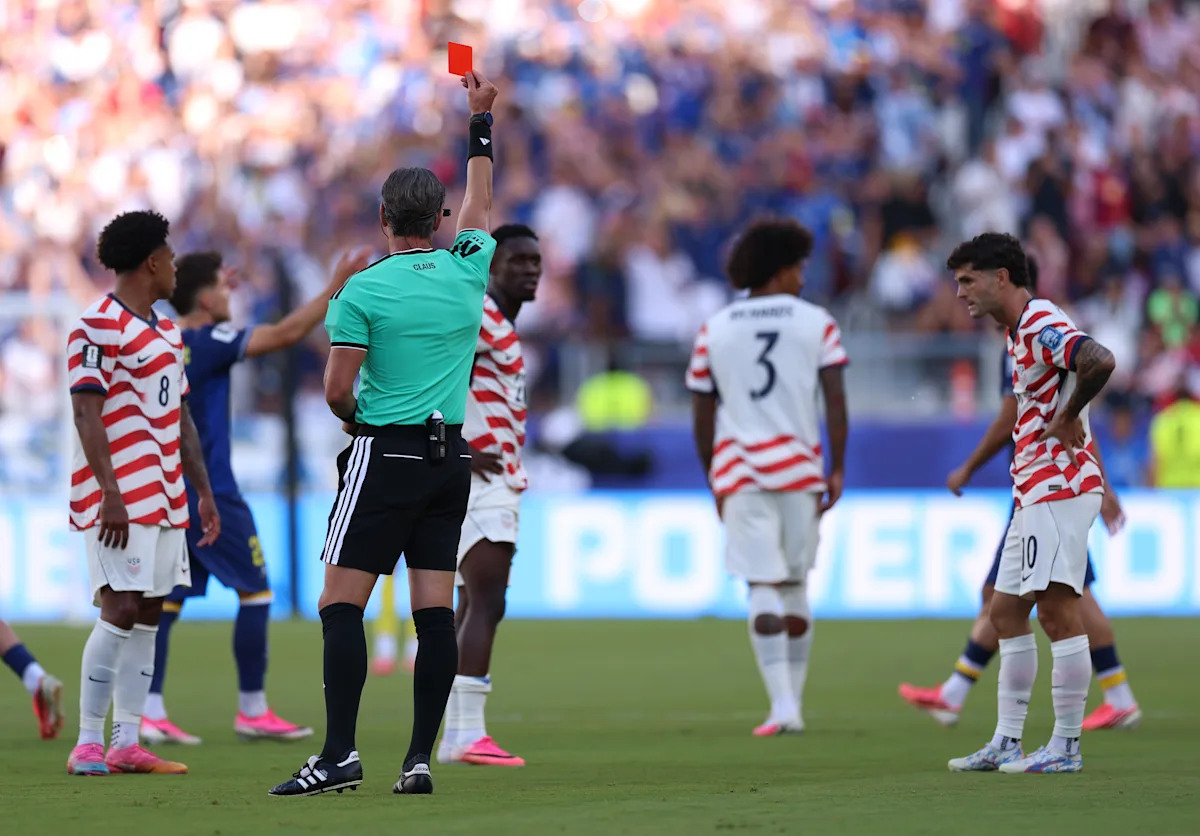
One of the biggest controversies of the tournament directly affected the United States, with the fallout around a red card issued to U.S. forward Folarin Balogun against Bosnia and Herzegovina. Balogun earned the card in the second half after his cleat found the ankle of Tarik Muharemović; the foul was confirmed by VAR review after not initially being called.
Advertisement
In addition to being ejected from the game, Balogun was then set to miss the USMNT’s Round of 16 game against Belgium, which the U.S. could not appeal.
But then, the day before the match, Balogun’s one-game suspension was suddenly overturned, allowing the striker to play against Belgium after all. The deferment was so surprising that even Balogun’s own teammates initially thought it wasn’t real.
Though it quickly raised red flags outside (and inside) the U.S., head coach Mauricio Pochettino said the team had been “punished enough” after having to finishing the Bosnia and Herzegovina game down a player.
President Trump later took credit for the sudden reversal, saying he had called FIFA president Gianni Infantino to ask for a review. Trump later said that he was “forced” to intervene.
Advertisement
The FIFA disciplinary committee defended its choice to defer Balogun’s suspension by one year, announcing Balogun would be put on probation for one year and fined $40,000. That punishment, the committee said in a statement, “was decided considering all of the specific circumstances surrounding the incident and evidence available.” Even more baffling, the decision to suspend Balogun’s punishment was reportedly made by one person, FIFA disciplinary chair Mohammad al-Kamali, without input from any of the 17 other members on the disciplinary committee.
An appeal from Belgium, which initially said it was “astonished” by FIFA’s decision, was denied hours before the game, and Balogun was included in the starting lineup. And yet, it didn’t end up mattering: Belgium crushed the U.S. 4-1, stifling Balogun from the very beginning.
Though Pochettino said that the whole saga was “not an excuse” for the team’s poor play, Balogun later said the “outside noise” of the controversy was “hard to avoid.”
Croatia loses by a hair
In a thrilling moment during the Round of 32, Croatia appeared to equalize against Portugal in stoppage time. But the goal was called back after VAR review, thanks to an offsides call determine by a microchip.
Advertisement
In the run-up to the potential game-tying goal from Joško Gvardiol, Ivan Perišić’s long ball into the box was received by Mario Pašalić before bouncing to find Gvardiol. But it was unclear whether Igor Matanović had hit the ball with his head, which was important for a potential offsides call: While Pašalić was onside when Perišić made his pass, Pašalić was offside as Matanović got his head on the ball.
Though video review alone wasn’t enough to determine whether Matanović touched the ball, a microchip inside the ball confirmed there was contact.
That decision sealed the 2-1 victory for Portugal, sending Croatia home in heartbreaking fashion.
Advertisement
Egypt cites ‘injustice’ in loss to Argentina
In the wake of Argentina’s stunning 3-2 quarterfinals win over Egypt, Pharaohs head coach Hossam Hassan pointed to conspiracy, saying that the tournament was “rigged.”
“Ordinary life, normal life is unfair, but why isn’t there any fairness in sports?” Hassan said. “I’m not convinced with this outcome. I’m not convinced with the way things unfolded during this match. I do not want to try to put it nicely here with beautiful wording and say ‘hard luck’ and so on and so forth. We have been treated unfairly. We have suffered injustice.”
Egypt certainly had some things to complain about: A goal from Egypt in the 59th minute was called back by VAR after reviewing a foul that had happened all the way on the other end of the field, 20 full seconds before the goal was scored. Though Egypt’s Mostafa Ziko was able to secure another goal in the 67th minute, the Pharaohs’ lead slipped away as Argentina scored one, two, then three goals in the final 15 minutes of the game.
The Egyptian FA pointed to “controversial and influential refereeing incidents” in the loss, drawing attention to what it believed was unfairness. But at the same time, it was a blown lead that defied history, from a team that keeps snatching last-minute wins — even if it did come in a tournament with a frustratingly high number of significant VAR calls.
Advertisement
Norway burned by VAR reviews — and possibly the skycam — in loss to England
Norway’s historic run came to an end in the quarterfinals, falling to England thanks to some controversial calls that stoked the fires of conspiracy among Norwegian fans.
The Vikings’ officiating woes started in the first half, as the ball appeared to hit a skycam wire in the run-up to England’s first goal, changing the angle of Norway goalkeeper Ørjan Nyland’s clearance. FIFA, however, later said that the ball’s internal sensor did not show any evidence that it touched the wire.
Then, early in the second half, Norway’s apparent go-ahead goal off a corner kick was called back due to a somewhat soft off-ball foul from Erling Haaland.
Advertisement
Not all of the VAR calls went against Norway. England had a goal disallowed due to offsides, and a review reversed a potential penalty kick for England. But combined with a frustratingly close match, it was enough for Norwegians to curse the officials and what some have dubbed “The Cable of God.”
“I’m not saying that we were lucky to win, but we were lucky in decisive moments,” England manager Thomas Tuchel said after the game. “You need moments where you’re lucky. Otherwise, it’s just not possible.”