
Written by Aminda Blaise Atabong and Zahra Bensamra
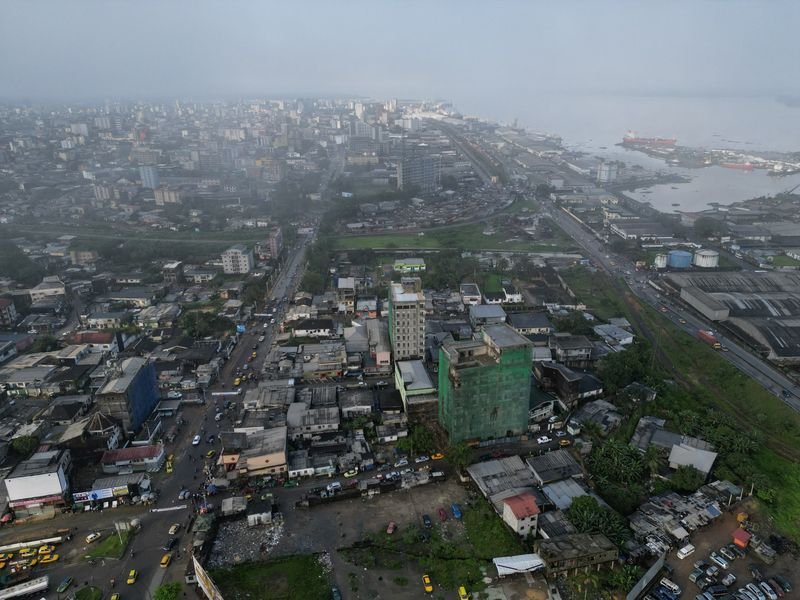
DOUALA, Cameroon (Reuters) – Zakiaw Mohammed woke up from another night of fitful sleep on his motorbike in Douala, Cameroon’s economic capital, and stretched his limbs under the awning of a gas station that provided him with shelter from the rain.
The 33-year-old, a native of northern Cameroon, who spends his nights at the station because he can’t afford a room, is one of thousands of motorcyclists in the coastal city who make a living on a fare starting at 100 CFA francs, or about 18 US cents.
The term benskin has two meanings: it refers to how drivers bend their bodies to ride and drive their bikes, and to how they bend and weave their way through Douala’s massive traffic jams.
Although they are sometimes demonized by government officials who blame them for petty crime and disorder, motorists say their plight encapsulates a larger, more structural problem: a lack of opportunity under President Paul Biya, who has ruled the central African country for more than four decades.
Biya, 92, is seeking to win an eighth term in the vote held on Sunday. The results have not been announced yet.
“I practice motorcycling because I have no choice. I have nothing else to do but this because there are no jobs,” Mohamed told Reuters as he prepared for a long day of transporting customers through potholes and muddy streets.
“Everyone is tired. We want change but people are afraid to speak out.”
Biya pledges to fix the “scourge” of unemployment
The official unemployment rate in Cameroon is 3.5%, although the figure among young people is much higher. The International Organization for Migration says the unemployment rate among Cameroonians between the ages of 15 and 35 is 39.3%.
Biya, who was raising the slogan “Greatness and Hope”, insisted that help was on the way.
During his only election campaign on October 7 in Maroua, the capital of Mohammed’s northern region, Biya acknowledged widespread frustration with the “scourge” of youth unemployment and pledged to address it if given another term.
“I will not rest until significant progress is made,” he said.
These promises ring hollow to Axline Ngwana, a motorist who said she wants to exclude Biya from the election.
“I hope for change, and I will vote for change,” she said, without specifying which competitor she would support.
Ngwana, 36, once worked as a nurse in the central city of Monatele, but gave up the job and her meager monthly salary of 10,000 CFA francs (about $18).
The single mother of three makes more these days ferrying passengers across Douala and running a small mechanical workshop.
She dreams of making the garage — a hole in the wall filled with car tire covers and oil containers — more modern, but currently lacks the means to do so.
“I work every day,” she said with a wry smile.
“In hell there is no rest.”
Parents fear for their children’s future
Karen Alfonsine Quigne, 39 years old, a petrol car driver, also described life in Cameroon as hellish, as her life has been marked by hardships since her mid-teens.
She dropped out of high school after her mother died to care for her siblings, which distracted her from her dreams of becoming a professional football referee.
Although she eventually managed to officiate a few local matches, with the medals and trophies to prove it, she had no way of turning this passion into a sustainable career.
One day, a friend lent her his motorcycle to take her home, and someone mistook her for a car driver and asked for a ride. She hesitated but accepted, and when she got the fare she realized she had found a new way to survive.
Now in her late 30s and a single mother of two, she rides her bike every day to earn a living, and wonders how her children will be able to support themselves if conditions do not improve.
“I just want to save enough to leave Cameroon and find a new start.”
For his part, Nobisi Mathurin Albert is committed to staying in Cameroon, but finds it difficult to imagine how conditions will improve for him and his fellow petrol drivers soon.
The 30-year-old once dreamed of becoming an engineer, but had to abandon his studies due to lack of funds and is now afraid to face former classmates who managed to graduate and find jobs.
Albert voted for the opposition candidate in the 2018 election and was “very disappointed” when Biya was declared the winner.
Allegations of voter intimidation, violence and ballot box stuffing cast doubt on the credibility of the result, but the government was dismissed and Biya remained in power.
This year, Albert wasn’t going to vote at all.
“I have lost confidence in the electoral process and in the government,” he said.
(Reporting by Aminda Blaise Attabong and Zahra Bensemra; Editing by Ruby Curie-Boulet and Alexandra Hudson)
Source link