
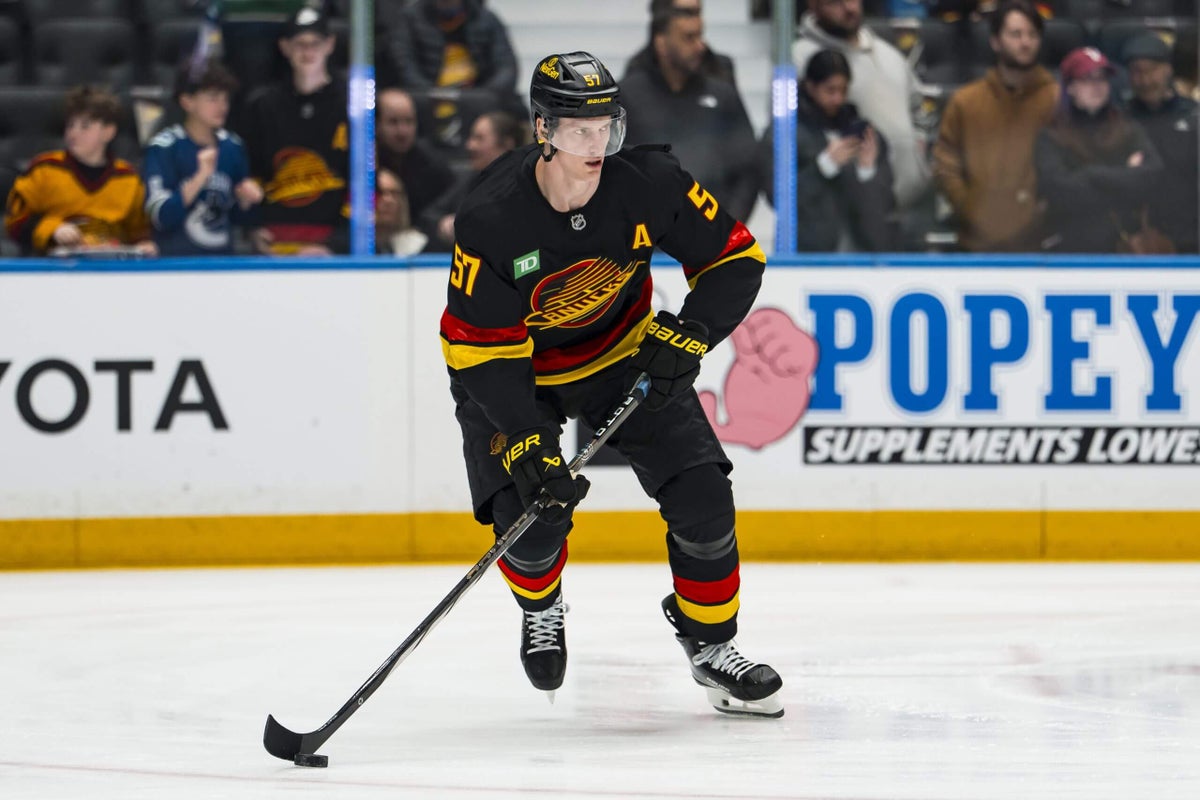
The Vancouver Canucks have agreed to trade defenseman Tyler Myers to the Dallas Stars, according to league sources. The Canucks will receive a second-round pick in 2027 and a fourth-round pick in 2029. The deal is pending a trade call with the NHL.
Myers, 36, has one more season on his contract after this one at a $3 million cap hit. Vancouver retained 50 percent of his contract in the deal, making Myers a $1.5 million player for the rest of this season and next. It’s critical to note that while Myers had a full no-movement clause for the 2025-26 season, which he waived to go to Dallas, that clause converts to a 12-team modified no-trade clause for the 2026-27 campaign.
With a reputation as a shutdown defender, the right shot played more than 20 minutes per game for the Canucks this season — the 16th time in 17 NHL seasons he’s been over that mark. Over the course of seven seasons and nearly 500 games with the Canucks, Myers was a reliable — if occasionally chaotic — top-four capable defender that earned trust and minutes from every head coach that he played for.
A settled family man who spends his summers in British Columbia, Myers was scratched 10 days out from the NHL trade deadline, although he continued to practice and take the warmup skate with the team. His absence from the lineup was felt enormously. The Myers showcase, in absentia, was a reminder of how understated but significant his contributions are as a big, two-way defender capable of holding up in tough minutes against top competition.
What Tyler Myers brings to the Stars
Myers might be 36, but he’s still 6-foot-7 and knows how to use his length and size in the defensive zone.
The 2010 Calder Trophy-winning blueliner has some mean moments as a physical presence and is generally used in a defensive role, although his primary five-on-five impact has typically been more offensive than defensive. He’s excellent at surfing the blue line and using his long reach to deny entries into the defensive zone. That skill both results in counterattacking opportunities for his team and explains why Myers’ clubs have typically generated more quality looks with him on the ice.
The key to maximizing Myers’ usage is to limit how often he’s put in a position to solve problems as a puck carrier. Myers has some real skill as an in-zone contributor, and is occasionally even dynamic when attacking downhill (where he’ll often use a deceptive back-hand shot), but his decision-making in the defensive zone as a puck handler and passer is prone to inconsistency.
This story will be updated.
Source link