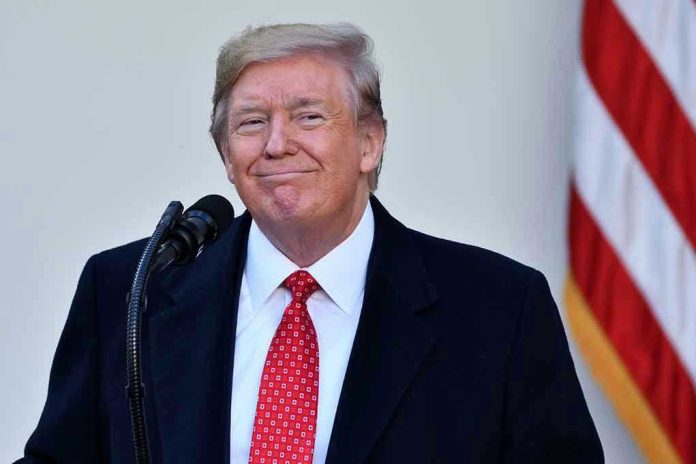
An invitation list has just turned America’s most routine governors’ meeting into a referendum on whether federalism still means working with people you didn’t vote for.
Quick take
- President Donald Trump is planning a White House meeting tied to the National Governors Association’s winter gathering and has invited only Republican governors, ending a decades-long bipartisan pattern.
- A separate dinner billed as bipartisan still exists, but Maryland Gov. Wes Moore and Colorado Gov. Jared Polis were disinvited without explanation.
- The National Governors Association warns that the move undermines the practical federal-state cooperation that governors rely on for emergencies, infrastructure and budgets.
- The White House says the president can invite whoever he wants and that Democrats will have other opportunities to meet with Trump and his cabinet.
A bipartisan ritual becomes a partisan door
The National Governors Association’s winter gathering typically ends with a simple message: Governors introduce themselves first as state leaders, then as party members. Trump’s decision to hold an NGA-related White House meeting for Republican governors only breaks that pattern and raises a more difficult question: Does Washington still treat governors as governing partners or as political props? Governors’ offices learned of the plan shortly before the report was made public, and the NGA issued a rare public reprimand.
Presidents of both parties have used this annual meeting as a pressure valve. Governors file federal complaints that never make it into cable news soundbites: disaster reimbursements, permitting delays, Medicaid dollars, National Guard logistics. The meeting works because it is boring and because it is inclusive. Remove a party and you won’t just skip the awkward photos; you reduce the incentive for governors to offer bipartisan support when Washington needs it, from storms to border surges.
The disinvitations that made it personal
The dinner was supposed to preserve a fragment of the old model, but the story came into even sharper focus when Moore and Polis learned they were no longer welcome. Moore is not just any participant; he is vice president of the NGA, and his team called the decision a “blatant lack of respect.” Moore also highlighted a reality that carries weight in state politics: He is the only black governor in the country, so exclusions are symbolic even when no reason is given.
Polis’ disinvitation is part of an already tense conflict. The reports link it to Trump’s months-long pressure on Colorado officials to pardon Tina Peters, convicted of state charges related to allegations of 2020 election tampering. A key civic detail is important here: Trump cannot grant a federal pardon for a state conviction. If Washington publicly leans on a governor for something he cannot legally achieve, then the conflict stops looking like politics and starts looking like leverage politics.
What the White House is saying and what governors are hearing
Karoline Leavitt, speaking on behalf of the White House, called the uproar a “non-story” and emphasized presidential prerogative, as well as separate meetings that Democrats can attend. This defense has a simple constitutional flavor: Presidents control their calendars, and no law mandates a bipartisan guest list. However, governors do not measure this event in legal terms. They measure it in terms of operational trust: Does Washington want information from all states or only applause from friendly states?
Gov. Andy Beshear’s response captured the cultural collision. He said he would not attend the dinner, describing the decision as putting partying above being American. Readers who appreciate conservative principles should separate two ideas that are often mixed together: the right of a president to set a guest list and the wisdom of using that right to weaken the mechanisms that operate the states and federal government. Rights can be real but be misused.
The hidden issues: federalism is based on relationships
Governors live by deadlines, not slogans. When FEMA paperwork bogs down, when military bases need coordination, when fentanyl and border controls collide with state law enforcement, governors call Washington and expect someone to come get them. The NGA exists because states need a shared channel that survives election cycles. Turning the NGA’s flagship moment into a partisan caucus indicates that relations are now more about party alignment than constitutional role, which is bad for every state.
Public disappointment with the NGA is significant because trade associations generally avoid getting into political crossfire. When she speaks, she tends to do so in the language of process: unity, dignity, constructive engagement. It’s bureaucratic on the surface, but it’s the backbone of American governance. A conservative, common-sense reading is simple: The country works best when leaders can talk like adults in the same room, then go home and govern their own state.
What happens next: precedent is the silent partner of politics
The short-term outcome might be predictable: Democrats skip dinners, Republicans attend meetings, cable news cycles come and go, and nothing “official” changes. The longer-term risk sets a precedent. If future administrations copy the model — one party inside, the other offering separate consolation meetings — then the NGA becomes less a forum for states than a rotating campaign stage. This change would reward performative conflict and punish the silent coordination that most voters never see but still depend on.
Trump excludes Democratic governors from annual White House meeting: report https://t.co/SrsUhVDREs
– Médiaïte (@Mediaite) February 10, 2026
The unanswered question is why Moore and Polis, in particular, were not invited. No explanation leaves a void, and politics always fills the voids of suspicion. Governors notice the slights because they negotiate for their state on a daily basis; respect is a currency. If the White House wants to cooperate on anything that crosses state lines — disaster response, transportation, public safety — it will eventually need governors it didn’t invite. The bill for this moment is due later.
Sources:
Trump to exclude Democratic governors from usually bipartisan White House meeting
White House excludes Democrats from its annual governors meeting
Trump-Mills sequel unlikely at White House governors event this month
Trump excludes Democratic governors from traditional White House meetings
Source link