
Which two teams will face off inside Hinkle Fieldhouse in Indianapolis for the 2026 Emirates NBA Cup championship? After Friday night’s action, the quarterfinals are set.
Over the summer, the league unveiled the full group stage schedule for the in-season tournament, with action taking place every Friday from Oct. 30 to Nov. 27 and on special Cup nights during Thanksgiving week (Nov. 24-25). The quarterfinals will begin on Dec. 4, with the final set for Dec. 11.
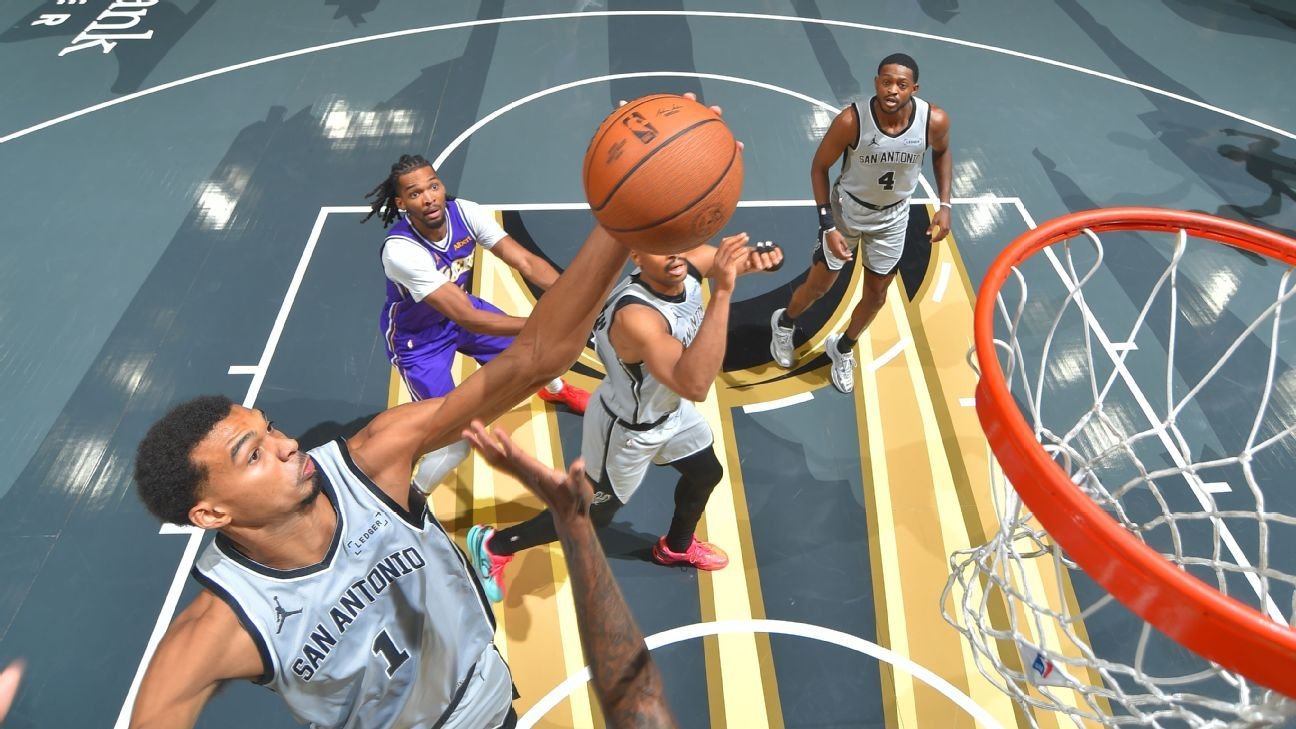
After the New York Knicks became the first team to win the NBA Cup and Finals in the same season, Jalen Brunson & Co. won’t be able to keep their championship run going. They were eliminated on the final day of group play with a loss to the Miami Heat. The team the Knicks beat in the NBA Cup and NBA Finals last season — the San Antonio Spurs — stayed alive with a win over the Los Angeles Lakers.
Here’s what you need to know about the in-season tournament, now in its fourth year.
Jump to a section:
Schedule | Groups | FAQ
Quarterfinal lookahead
After a Friday night full of comebacks, blowouts and intricate tiebreaker scenarios, the NBA Cup quarterfinals are set.
Through Friday’s games, the Philadelphia 76ers, Detroit Pistons, Atlanta Hawks and Boston Celtics are the top four teams in the Eastern Conference standings — and now they’re the four Eastern teams advancing to the NBA Cup quarterfinals, too. Philadelphia will visit Atlanta while Boston visits Detroit as the single-elimination portion of the in-season tournament begins.
In the Western Conference, the Spurs will visit the Dallas Mavericks in an in-state rivalry game, while the Memphis Grizzlies visit the Portland Trail Blazers in a matchup of unlikely contenders.
Here are two main trends and takeaways to watch as the quarterfinals commence next Friday night.
A different sort of star power
Of the 10 players who made first- or second-team All-NBA last season, only three are advancing to the NBA Cup quarterfinals, and only one might be healthy next week: Victor Wembanyama, Cade Cunningham (who has missed the past two Pistons games with a knee injury) and Jaylen Brown (who has missed three of the past five 76ers games with a hamstring injury).
Some stars who didn’t make an All-NBA team last season due to injuries, such as Giannis Antetokounmpo, Stephen Curry and Anthony Edwards, will also be absent from remaining NBA Cup action, though Jayson Tatum will be available for Boston.
That’s not to say that the knockout rounds will be devoid of stars, of course. With Philadelphia alone, even if Brown can’t play, the 76ers should have Tyrese Maxey (a third-team All-NBA honoree last season), former MVP Joel Embiid and megastar LeBron James available in Atlanta next week. They’ll face third-team All-NBA star Jalen Johnson.
Elsewhere, veteran star guards in Kyrie Irving and Damian Lillard are ready to go, and Deni Avdija and Paul George bring prestige and All-Star skills on the wings. Cooper Flagg is one of the NBA’s most superb rising talents.
But in general, injuries and the results of group play have set the stage for a different sort of star power to shine in this year’s NBA Cup. Among the league’s most famous older veterans, only James is still playing, while players such as Curry, Kevin Durant and James Harden have been eliminated; even most of the top mid-career veteran stars, such as Antetokounmpo, Luka Doncic, Nikola Jokic and Shai Gilgeous-Alexander, are absent as well.
In their stead, younger talents have the chance to show out on a national stage. Wembanyama and his Spurs teammates already got that opportunity last spring, of course, but now they’ll face 19-year-old Flagg in a must-see battle. Maxey could be the best player in the knockout rounds. Avdija or Cedric Coward could lead a Cinderella run to the final.
Without making too much of a small-sample tournament, one could consider this NBA Cup knockout stage as a sort of trial run for what might happen as a new generation takes center stage in the league.
Profound parity
Before this season, more NBA Cup group winners than not enjoyed a perfect record to clinch that spot. In 2023-24, the first year of the Cup, four teams won their groups with a 4-0 record, including eventual finalists (the Los Angeles Lakers and Indiana Pacers). In 2024-25, two teams went 4-0, including the eventual champion Milwaukee Bucks. And in 2025-26, four more teams were undefeated in group play — though the Knicks and Spurs, who met in the Cup final, won their groups with 3-1 marks.
In total, entering this season’s tournament, 10 of the 18 group winners to date had gone 4-0.
But that trend changed in a dramatic way this season. Only one team finished 4-0, and that squad was a major surprise: Dallas, which already beat the Denver Nuggets, Houston Rockets and Utah Jazz in group play before engineering a comeback win in Phoenix on Friday, on the strength of a 35-14 fourth-quarter advantage.
For as well as Flagg and Irving have played this year, however, one would be hard-pressed to consider the Mavericks favorites in their next Cup game against San Antonio, let alone to win the entire tournament. And while the Spurs might profile as favorites, they just lost a Cup game in Portland and needed a furious second-half comeback to beat the Lakers and qualify for the knockout stages.
In fact, the other seven teams that reached the quarterfinals besides Dallas all went 3-1 in group play. Perhaps that change from recent history can be chalked up simply to a small sample size. But it also reflects the reality that there’s no overwhelming favorite among the remaining teams. The NBA Cup race still looks wide open, even as the field dwindles from 30 teams to the final eight.
— Zach Kram
2026 Emirates NBA Cup schedule
Knockout rounds
Dec. 4: Quarterfinals
Philadelphia 76ers at Atlanta Hawks, 7 p.m. ET (Prime)
San Antonio Spurs at Dallas Mavericks, 9:30 p.m. ET (Prime)
Dec. 5: Quarterfinals
Boston Celtics at Detroit Pistons, 7:30 p.m. ET (Prime)
Memphis Grizzlies at Portland Trail Blazers, 10 p.m. ET (Prime)
Dec. 8 and/or Dec. 9: Semifinals
Dec. 11: Championship
Group Play
Oct. 30
Boston Celtics 125, Chicago Bulls 111
Detroit Pistons 110, Brooklyn Nets 94
Philadelphia 76ers 98, New York Knicks 93
Orlando Magic 121, Toronto Raptors 114
Miami Heat 145, Indiana Pacers 125
Dallas Mavericks 116, Houston Rockets 111
Minnesota Timberwolves 127, LA Clippers 101
Golden State Warriors 112, Los Angeles Lakers 95
Denver Nuggets 127, Phoenix Suns 120
Nov. 6
Nov. 13
Indiana Pacers, 106, New York Knicks 104
Orlando Magic 107, Milwaukee Bucks 99
Miami Heat 133, Cleveland Cavaliers 121
Chicago Bulls 125, Atlanta Hawks 117
Memphis Grizzlies 142, New Orleans Pelicans 111
Houston Rockets 125, Utah Jazz 118
San Antonio Spurs 123, Golden State Warriors 85
Portland Trail Blazers 120, Sacramento Kings 107
LA Clippers 113, Oklahoma City Thunder 112
Nov. 20
Nov. 24
Nov. 25
Nov. 27
Miami Heat 108, New York Knicks 105
Detroit Pistons 113, Milwaukee Bucks 98
Philadelphia 76ers 111, Indiana Pacers 87
Toronto Raptors 124, Brooklyn Nets 100
Atlanta Hawks 87, Boston Celtics 86
Memphis Grizzlies 114, Minnesota Timberwolves 109
Dallas Mavericks 113, Phoenix Suns 109
San Antonio Spurs 99, Los Angeles Lakers 96
Denver Nuggets 120, Utah Jazz 107
New Orleans Pelicans 105, LA Clippers 104
Portland Trail Blazers 116, Golden State Warriors 94

NBA Cup FAQ: Everything to know
What is the format?
NBA commissioner Adam Silver has had a longstanding fascination with European soccer. Establishing an in-season cup competition within the NBA schedule came from soccer leagues having both a regular-season title, won by the team with the most points over the full year, and a separate tournament (or, in some leagues, multiple tournaments) that runs concurrently with the league season.
In England, for example, there are the various divisions — led by the Premier League — and also the FA Cup competition. But unlike those European leagues, which play their cup competitions outside of their league schedules, the NBA Cup is built in to the regular-season slate.
The 30 NBA teams are split into six five-team groups — three featuring Eastern Conference teams and three comprising Western Conference teams — with each team then playing one game against the other four in its group. The winner of each group, plus the team with the best record among the non-group winners, advances to the knockout stage of the competition.
How will this impact the regular-season schedule and standings?
Typically, the NBA sends out a full 82-game schedule in mid-August. Now, the league sends out only 80 games and leaves a gap of roughly a week to fill in later, depending on how the group stage of the NBA Cup plays out.
The two teams from the East and West that lose in the quarterfinals will play their 82nd game against each other. Meanwhile, the 22 teams that fail to qualify for the knockout rounds will have their final two games scheduled — one at home and one on the road against others eliminated in the group stage.
The teams that reach the NBA Cup final will actually play 83 games — though the championship game won’t count toward the standings or any statistical markers. The four teams that reach the semifinals will have completed their 82 games and won’t need any other games added to their schedule.
Any team that makes it to the semifinals will have that game moved later in the schedule to avoid back-to-back games. The NBA made this change in an effort to avoid having empty days on the calendar while attempting to minimize back-to-backs for all teams as much as possible.
Where are the semifinals and final being played?
In a shift from previous tournaments, the quarterfinals and semifinals will be played at home sites. The Dec. 11 title game, meanwhile, will move from Las Vegas to the storied Hinkle Fieldhouse in Indianapolis. NBA commissioner Adam Silver previously said the league was searching for “storied college arenas” to play host to the Cup final. (No venue has been announced for 2027.)
Why does the NBA Cup include regular-season games?
Before its launch, one of the main questions surrounding the in-season tournament was why any team would be incentivized to compete in it. The NBA ensured teams will be motivated by making every game part of the season and, as in-conference matchups, potentially important to playoff tiebreakers. If this had been set up like the cup tournaments in European soccer, there would have been nothing stopping NBA teams from opting out by sitting their top players for extra rest.
Which teams make up the groups?
To create the groups, the NBA put the 15 teams in each conference into five pots, separated by their finish last season. Pot 1 included the teams that finished in the top three in the regular-season standings, Nos. 4-6 in the standings went into Pot 2, Nos. 7-9 into Pot 3, Nos. 10-12 into Pot 4 and Nos. 13-15 into Pot 5. As a result, the following groups were drawn:
East Group A
East Group B
East Group C
West Group A
West Group B
West Group C
Does one group stand out the most from the others?
East Group B is a monster.
All five teams — defending NBA Cup and Finals champion New York, Philadelphia, Cleveland, Miami and Indiana — are among the favorites to win the conference in 2026-27. The group stage will also feature reunion games for LeBron James, when the 76ers face the Cavs and Heat. And after guard Tyrese Haliburton missed the entire 2025-26 season while rehabbing a torn Achilles, the Pacers will be back among the East elite and hungry to reach the title game in Indianapolis.
What do players get for winning?
In 2023, the first year the tournament was held, the players on the winning team received $500,000 each and the runners-up got $200,000. The losing players of the semifinals each got $100,000, and those ousted in the quarterfinals got $50,000. Now, in each subsequent year, the prizes will be slightly higher, as a result of negotiated raises year over year to keep pace with increases in the salary cap and basketball-related income as part of the most recent collective bargaining agreement between the NBA and the National Basketball Players Association.
Will anyone earn individual honors for their play in NBA Cup games?
There will be an MVP award, as well as an all-tournament team.
Will this have any impact on the playoffs?
Not beyond the games counting in the regular-season standings (and toward tiebreakers). The only playoff impact comes from the wins and losses accrued throughout the tournament. Though there was debate among league insiders about guaranteeing a playoff berth for winning the tournament, ultimately that idea (or any other to further incentivize teams) was not enacted.
Why is it called the Emirates NBA Cup?
The league struck a sponsorship deal with Emirates, the Dubai-based airline, to sponsor the tournament after its initial run. The NBA said in 2023-24 that it went with the most basic titles for both the tournament and its trophy — the “in-season tournament” and “NBA Cup” — as a way to introduce the concept to fans. However, using such nondescript names had another clear advantage: It gave the league a blank slate in case it sold the naming rights for the tournament and cup to a sponsor and avoided the complications that could arise by naming them after someone (for example, late NBA commissioner David Stern, one possibility that had been floated before the tournament was officially unveiled).
Previous NBA Cup champions
2025
2024
2023
