
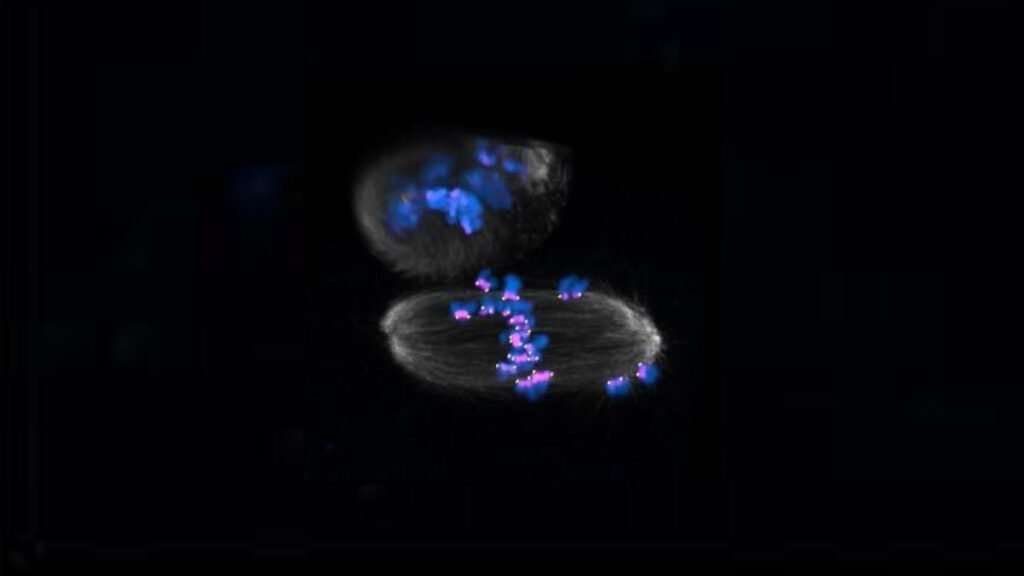

Around the world, people are increasingly choosing to have babies later in life for reasons both social and economic. As they get older though, they face a mounting biological challenge: genetic errors caused by chromosomes failing to separate correctly. This phenomenon, known as aneuploidy, is the leading cause of age-related infertility, failed in-vitro fertilization (IVF) cycles, and miscarriage, and it increases dramatically around the age of 40. Studies have shown that between 50% and 80% of embryos from women in their 40s carry chromosomal abnormalities.
One of the main drivers of aneuploidy is the loss of a protein complex called cohesin, which acts like a molecular glue holding chromosomes together. In a new study, researchers at the Max Planck Institute for Multidisciplinary Sciences in Göttingen, Germany, engineered a novel protein system capable of restoring normal chromosome connections in aging mouse eggs. The study, published Thursday in Science, raises the possibility of one day developing such a system into a treatment that could reduce aneuploidy in human eggs used for IVF.
Source link
