For 150 years, catcher has been the most important position on a baseball field. And the relationship between pitcher and catcher has always been crucial.
“As a catcher, you take ownership and have pride for how you play a game and how you work,” Rockies catcher Hunter Goodman told Yahoo Sports. “[We] do a lot of work before the game starts game-planning.”
Advertisement
Recent technological advancements in the sport, PitchCom — a communication system that allows catchers to relay pitches to pitchers without using signs — have modernized the pitch-calling process. Still, the essential process is the same: The catcher calls a pitch, and with conviction in the pitch and trust in the catcher, the pitcher throws it.
“I think there’s a trust factor that comes with calling a game,” Kansas City Royals catcher Carter Jensen said. “As a catcher, you try to gain the trust of your manager, the pitching coaches and then, obviously, the trust of the pitching staff.”
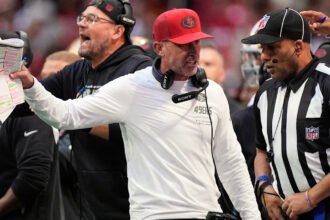
But baseball’s newest evolution impacts the catching position directly. Across MLB, some teams have begun to call pitches from the dugout, with coaches making and relaying the pitch selection instead of entrusting catchers with that responsibility.
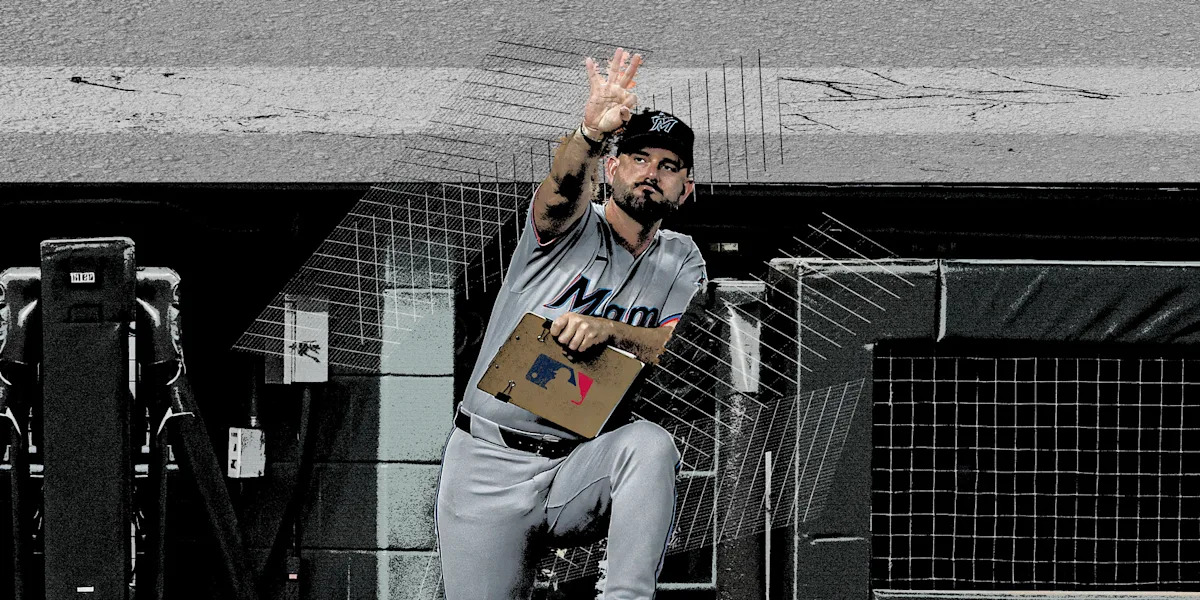
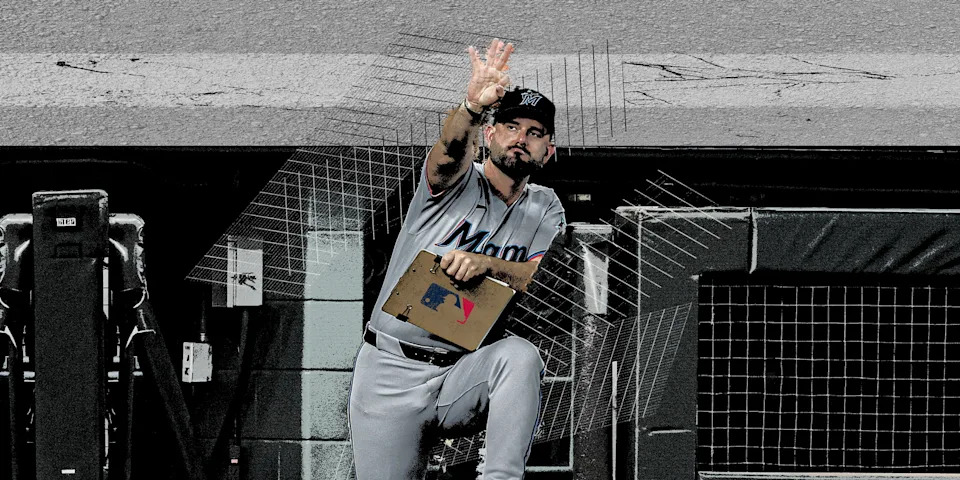
The Miami Marlins began this trend in 2025, opting to have a member of the team’s coaching staff call pitches from the dugout and signal them to the catcher via signs. From there, the catcher selects the pitch via PitchCom, and the pitcher executes.
Advertisement
The trend is catching on around the league. The New York Mets, Colorado Rockies and, most recently, Washington Nationals have been calling pitches from the dugout this season. Several more teams, while they might not have adopted this practice at the big-league level, have experimented with it in the minor leagues and discussed implementing it.
Calling pitches from the dugout isn’t uncommon in high school or college ball, where many coaches call pitches from the side. Historically, though, once a catcher reaches pro ball, he is responsible for calling the game. With this latest trend, that could change across the league.
“I think it’s going to end up being a real thing here soon,” Brewers manager Pat Murphy said. “I thought about this when I was [coaching] in college. I’m like, ‘The major-league guys are crazy. Why wouldn’t they do what we’re doing?’ It makes too much sense.”
Why call pitches from the dugout?
The origin of this trend begins with Marlins assistant pitching coach Rob Marcello. Marcello has been developing his system since he got into coaching in 2019, when he was working in the minor leagues with the Mariners. At the time, he ran an early version of the system with future All-Star and Platinum Glove Award winner Cal Raleigh.
Advertisement
Most of his process isn’t that different from typical game-planning for pitching coaches, run-prevention staff and catchers. Every team has data on hitters’ strengths and weaknesses and pitchers’ strengths and weaknesses, and they use that data to create a game plan for the day’s matchup. Traditionally, catchers then use that plan to inform their pitch selections as they work through a game.
In Marcello’s way of doing things, he takes that data before games and plugs it into a statistical modeling program to help come up with the game plan for how to attack hitters. Then a coach uses that information in-game to select pitches from the dugout, shifting the decision-making power away from the catcher.
Why do things this way? Pitch optimization. In a baseball world in which data is king, optimization is everything. Teams use data to optimize lineups on a daily basis, which is why platoons are so popular. They also optimize in the bullpen, deploying a specific pitcher to face certain pockets of a lineup. Optimizing for pitch selection is a natural progression of this.
Still, Marcello knows this new way of calling pitches is a big talking point around the game and isn’t always well received in a sport that reveres tradition. But he’s OK with that.
Advertisement
“I think more teams can adopt it. Sure, it’s against the norm, and there’s that pressure that you feel from dugouts,” he told Yahoo Sports. “But at the end of the day, it comes down to pitcher execution, and how do I make them believe that this is the best plan for that day?”
‘It frees you up for some of the actual catching stuff’
To run a system calling pitches from the dugout, you need real buy-in from your catchers. Because nobody’s job is more affected by this change.
Marlins catcher Joe Mack was in Triple-A when he began learning the system now run by Marcello and the team at the big-league level. He’d be the first to tell you that it took some getting used to.
Advertisement
“First impression, I thought I wouldn’t like it,” he said. “Because it takes away an asset that I have as a catcher to be able to call a game. So that’s where I was like, ‘Well, how am I going to learn? How am I going to get better at that?’ But you know, just following how those pitches are being called through the dugout gives me a better understanding.”
In addition to being a teaching tool for young catchers, one of the most commonly cited benefits of this system is that it takes a lot off the catcher’s plate from game to game. With fewer game-planning responsibilities behind the dish, a catcher has more bandwidth to focus on other areas of his game, both defensively and offensively.
“I feel like you can focus a lot more on the physical aspect,” Goodman said of catching without pitch-calling. “You can think more about the running game or, like, how I’m going to receive this pitch, being prepared to block a little more. Your brain is not so locked down on ‘Is this the right pitch? Is this the right spot?’ … It kind of frees you up for some of the actual catching stuff.”
Is calling pitches from the dugout a fad or the way of the future?
(Joseph Raines/Yahoo Sports)
‘It’s taking the feel out of the game’
Even with those benefits, as catchers around baseball have begun to see and hear about this new way of game-calling, there has been a common refrain.
Advertisement
“Hate it, man,” A’s catcher Shea Langeliers told Yahoo Sports. “There’s no real room for learning. I’m assuming the coaching staff’s looking at the percentages and everything. So … I understand that’s kind of where the game’s heading, but it’s taking the feel out of the game. The last time I looked [to the dugout] to get a pitch was my junior year at Baylor, and I feel like from a game-calling perspective, me at 21 vs. me now, it’s completely different, how I think about the game.”
One of the biggest critiques catchers expressed about calling pitches from the dugout isn’t even about pitches themselves. It’s about all the other things within a game that influence what pitch should be called in a given moment. Many of those factors, they argue, can’t be taken into account from 50 feet away.
For instance, some catchers pointed to being able to react to hitters’ swings as an important element when sequencing an at-bat. Others brought up the fact that while the data might signal to go to a specific pitch for a specific count, each game presents its own set of constantly changing variables, including a pitcher not having feel for a pitch or losing confidence in it.
“If I get in a one-run game or a tie game, runner on second, and I’ve thrown a guy eight sliders that he’s not supposed to hit, he’s got a better chance of hitting that slider because he’s seen them a lot,” said Cleveland Guardians catcher Austin Hedges, who’s considered one of MLB’s best game-callers. “My eyes are telling me he’s trying to figure this out. And since he’s trying to figure this out, that means he can’t hit this other pitch, and so I’m gonna go challenge him with the other pitch, and then I might go back to the slider.
Advertisement
“The goal of pitch-calling is to keep hitters in-between. You’re not just trying to get them out with a pitch. You want them in-between because if you’re in-between, you’re going to swing and miss, or you’re just going to hit softly somewhere.”
Every catcher interviewed for this story said he understood why a team might do things this new way. But the overwhelming majority believe there are more things to be lost with this system than there are advantages to gain by calling pitches from the dugout.
Catchers have the best perspective on everything happening on the diamond, and they’re widely considered the smartest players on the field. Seattle Mariners manager Dan Wilson and Cleveland Guardians manager Stephen Vogt, both former catchers, seemed to have that in mind when assessing this new way of doing things.
“If you’d have said we’d had computers calling balls and strikes 10 years ago, I’d have said you’re crazy. The game is changing. There’s no question about that,” Wilson said. “[But] there’s a lot of other information [catchers] take in being back there that really goes into calling a pitch and trying to get your pitcher through a certain day. So I’m not saying it’s right or wrong. I’m just saying there are a lot of clues that you’re going to miss.”
Advertisement
Said Vogt: “They’re the ones back there with the feel and understanding. We can’t see everything from the side, so I don’t think that’s going to happen in Cleveland anytime soon.”
‘How are we gonna do it without your best stuff?’
Big-league catchers are obsessed with every aspect of their position and their craft. From the time they wake up to the time the game is over, your average catcher isn’t just going over a few notes. They’re processing tons of information, from heat maps and pitch data to strategizing a lineup’s weaknesses vs. a starter’s strengths.
Advertisement
Look no further than Cincinnati Reds catcher Jose Trevino. Trevino, who won the Platinum Glove in 2022, has made his name in the big leagues with his defensive abilities and game-calling. But the Reds’ catcher will tell you that none of that happened on the fly.
Since he reached the big leagues in 2018, Trevino has kept a binder with detailed notes of everything he has seen behind the plate, including hitters’ tendencies, strengths and weaknesses. Trevino’s binder is as thick as an old-school phone book, and it’s a big reason he has stuck in the big leagues. When the Reds catcher talks about the work catchers do behind the scenes, that includes going through the notes he has taken over the years, as well as integrating new information from the current season.
“You get to see how beautiful this game is when we’re back there,” Trevino told Yahoo Sports. “This is an art. Calling a game is an art. Playing the game is an art. Having a pitcher dot a ball down and away when he needs to make a pitch … that’s art.
“The hardest thing for a catcher to do is to call a game and manage a staff,” he continued. “I enjoy the thrill of a game where my pitcher might not have it that day. ‘All right, how are we gonna get him through this?’ I enjoy that. Of course, I want my pitchers to have their best stuff every single outing, but we’re humans. It’s not gonna happen. So how are we gonna get this guy out? How are we gonna do it without your best stuff?”
Advertisement
Taking pitch-calling off a catcher’s plate might sound reasonable in theory, allowing him to focus on other aspects of the game. But for many catchers, this switch removes not only the ownership of game-calling, which they consider their main responsibility, but also the work that they consider their craft. Without that, catching is a very different job. What’s more, there are some key elements of catching and pitch-calling that, they contend, won’t ever appear in the data.
“Playing with Yadier Molina and learning from him, he would almost call [games] at random,” Cubs catcher Carson Kelly said. “But when it was crunch time and there were guys on base and we needed to make pitches, he knew exactly where he needed to go. I think you get that experience in calling pitches and making mistakes and learning from them. I just think that knowledge, if somebody else is calling it, I wouldn’t say you turn off a little bit, but you don’t think along with the game as much.”
Said Hedges: “Scouting reports are great, and it works on average and below-average hitters. You can exploit outliers — this guy really just doesn’t hit these pitches. I can expose that. But once you get above-average, especially great hitters, they hit everything. And even if they’re not hitting it, once they see it two, three times, usually later in games, that’s the difference between a win and a loss.”
What does the MLB rulebook say about this?
Calling pitches from the dugout doesn’t break any MLB rules; if it did, the league would’ve already prevented teams from doing so. As of now, the only restrictions the league has implemented limit the use of AI programs during games and in dugouts. Using AI and other statistical modeling as part of pregame planning is allowed.
Advertisement
“I’ve gotten plenty of texts about it,” Marcello said of AI. “I can tell you we’re not using it in the dugout. We haven’t used it in the dugout. I can see how someone could use it that way, but that would take more of that human element away. … We print out these reports as our game plan. The game starts, and something changes — OK, let’s adjust.”
So why does this trend feel wrong to some around the game? It goes back to the art of catching. If a team eliminates the human element of the position, opting to call games based on data alone, is that in the spirit of the game? Many would say no.
“It kind of alters that feel out of the game,” Langeliers said. “Everybody talks about playing the game within the game. If I’m looking in the dugout trying to get the pitch from the dugout, I’m not paying attention to this guy [at the plate]. He could be adjusting right in front of me, and I’m not paying attention to it.”
The question then becomes whether a hybrid version of pitch-calling might be optimal. The Mets have come up with one such modification. Former big-league catcher J.P. Arencibia, the team’s catching coach, calls pitches for New York. But Arencibia, who caught in the big leagues for six years, gives what he calls suggestions to his catchers. He says the catchers have full authority to make the final pitch decision.
Advertisement
Another compromise that Hedges suggested is using this system only for young catchers, like Mack, who is in his rookie season with Miami.
“I think for a young guy, I could see it working,” he said. “Because for a young guy, the game can speed up on them a lot … so I think as long as you were using it as a teaching tool, then I would be in on it.”
The Rockies, meanwhile, began the season calling pitches from the dugout but have transitioned back to the traditional method, with a few tweaks.
“Right now, we’re going back to catcher calling the game for the most part,” Goodman said. “But I can still at any time say, ‘Hey, what are we thinking for a specific situation?’ So that’s been an interesting adjustment.”
Advertisement
Marcello summed it up like this: “Do we have all the answers in the dugout? No. We just want to get our guys to believe that this is how we want to throw the baseball.”
Where will the sport go from here?
Baseball is a copycat league. When it comes to the latest en vogue things, teams are quick to replicate what they see happening in other dugouts. So what does the future look like in terms of catchers calling or not calling games? The guesses varied.
“I think it’ll depend team-to-team, who’s catching and how they trust their guy,” Goodman said. “… But I think personally, the best way to do it, I think, is to still have the catcher call the game.”
Advertisement
“Five years from now, I would say 90 percent of teams [are calling pitches from the dugout],” Marcello surmised. “I think teams realize that it works and will just be like, ‘All right, let’s make this somebody’s job as a pitch-caller.'”
“Ten years from now, I imagine that it’s going to be like the NFL, where you have a coordinator calling it from up top,” Trevino said. “Like, after I’m done playing, I could get a call from a team and they’re like, ‘Come call pitches for us.'”
What we know for sure is that it didn’t take long for some teams to follow the Marlins’ lead once they decided to try something different. Catchers around the sport seem to believe that this is only the beginning of the trend, as the world of data continues to integrate into baseball.
Still, they’re holding out hope that their expertise will continue to be valued as the sport evolves and that the nuance of their position won’t get lost in the name of optimization.
Advertisement
“I’m always in on teams taking chances, taking risks to try and get better,” Hedges said. “If you can prove to me that this is better than me calling a game, I would do it in a heartbeat, as long as it’s about winning, and this is going to help us win more games.
“I’m curious to see where the game goes with it.”